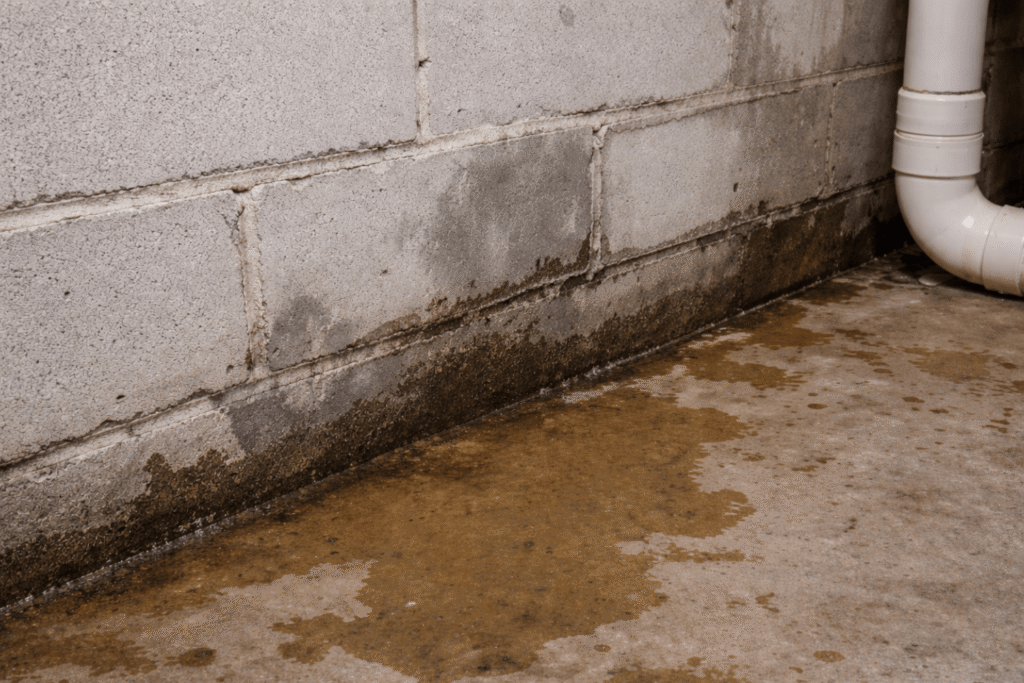
If you’ve noticed water appearing along the edge of your basement, right where the wall meets the floor, you’re dealing with one of the most common and misunderstood types of basement leaks.
Often referred to as a cove joint leak, this issue can show up during heavy rain, snow melt, or periods of high groundwater. While it may seem like a minor nuisance at first, it’s actually a sign of pressure building around your foundation.
Understanding why your basement is leaking where the wall meets the floor can help you address the root cause before the problem worsens.
What Is the Cove Joint in Your Basement?
The cove joint is the seam where your basement wall and floor meet. These two components are poured separately during construction, which means the joint between them is not a fully sealed connection.
Because of this, the cove joint is naturally one of the most vulnerable points in your foundation. It doesn’t take much pressure for water to find its way through this seam, especially when the surrounding soil becomes saturated.
Why Water Leaks at the Wall-Floor Joint
A cove joint leak in the basement is almost always caused by hydrostatic pressure.
When soil around your home becomes saturated, from heavy rain or melting snow, water builds up around the foundation. As that pressure increases, it pushes against both the walls and the floor. Since the cove joint is the path of least resistance, water is forced through the seam and into your basement.
This is why leaks often appear:
- After prolonged rainfall
- During spring thaw
- When the ground is fully saturated
It’s not just surface water, it’s groundwater being pushed inward.
Why This Problem Is So Common in Western PA
Homes in Western Pennsylvania are especially prone to cove joint leaks due to a combination of soil and climate conditions.
Clay-heavy soil holds water longer than other soil types, which increases the amount of pressure placed on your foundation. Instead of draining quickly, moisture lingers around your home, continuing to push against basement walls and floors.
Add in freeze–thaw cycles, aging drainage systems, and older construction methods, and you have the perfect conditions for recurring leaks at the wall-floor joint.
Signs You’re Dealing With a Cove Joint Leak
This type of leak is usually easy to identify once you know what to look for.
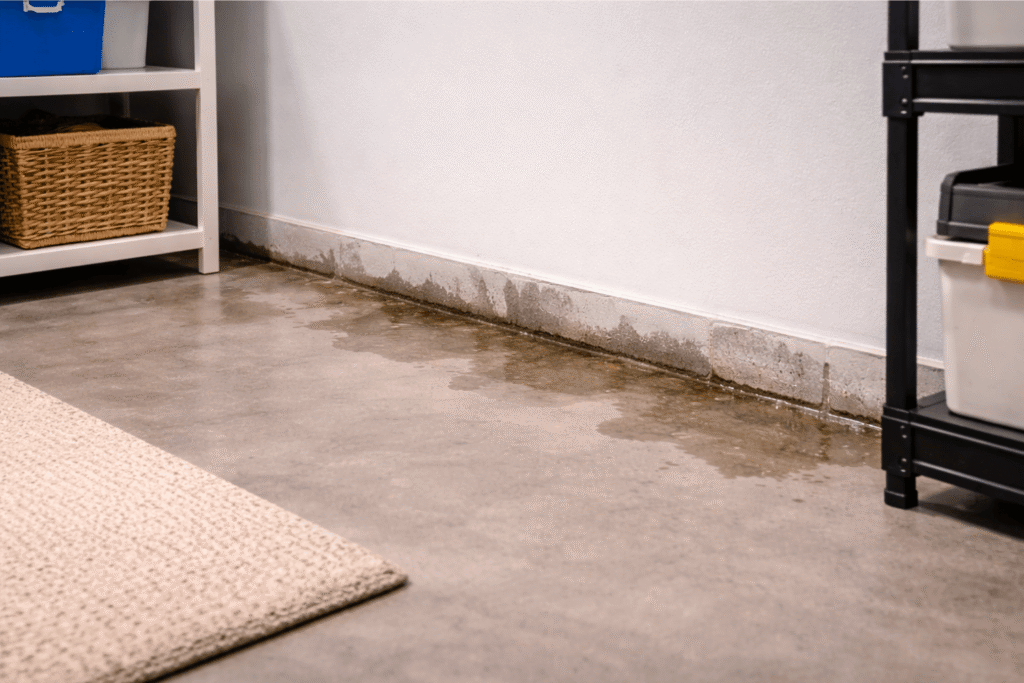
Water may appear as a thin line along the perimeter of your basement, or you might notice dampness where the floor meets the wall. In some cases, it shows up as small puddles after rain, while in others it may only leave behind moisture or staining.
Unlike wall cracks, the water typically follows the edge of the basement rather than a vertical or horizontal line.
Why Sealing the Joint Isn’t Enough
A common reaction is to try sealing the joint from the inside using caulk or waterproof coatings. While this might temporarily reduce visible water, it doesn’t solve the underlying issue.
The problem isn’t the joint itself, it’s the pressure behind it.
As long as hydrostatic pressure exists, water will continue to push inward. If one area is sealed, it often finds another path. This is why many DIY fixes fail to provide long-term results.
How to Fix a Basement Leak at the Wall-Floor Joint
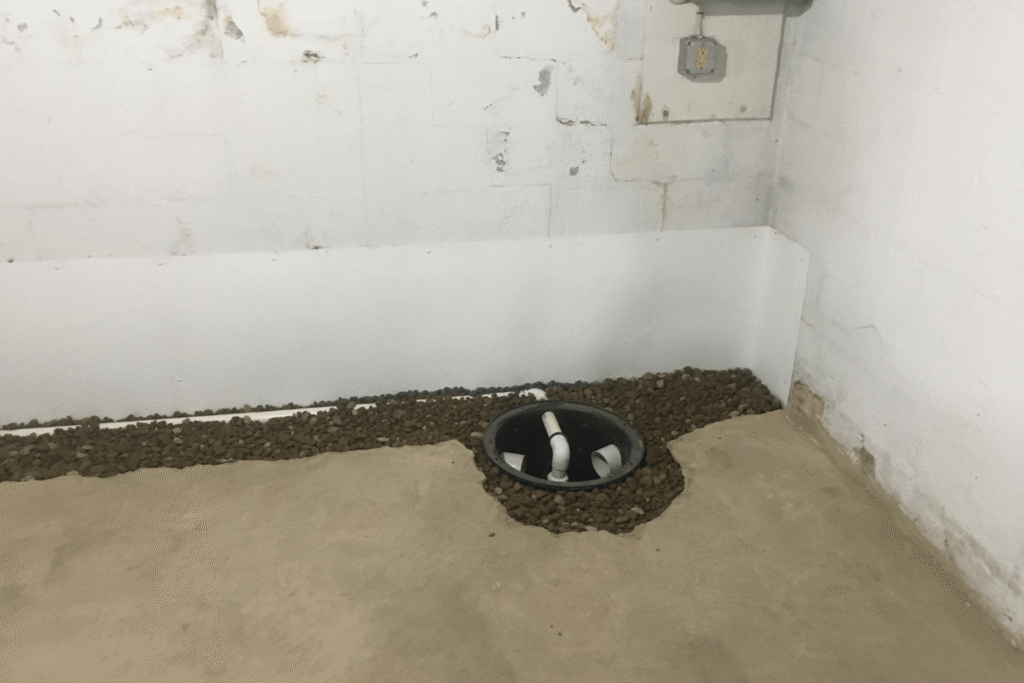
To properly address a basement leaking where the wall meets the floor, the solution needs to focus on managing water before it enters the space.
This typically involves installing a drainage system that relieves pressure and redirects water away from the foundation. Interior drain tile systems are one of the most effective solutions, as they collect water at the cove joint and channel it into a sump pump for removal.
In some cases, exterior drainage improvements may also be recommended to reduce the amount of water reaching the foundation in the first place.
The goal is not to block water, it’s to control it.
Why Ignoring the Problem Can Lead to Bigger Issues
Even if the leak seems minor, repeated moisture intrusion can lead to long-term damage.
Over time, water entering at the cove joint can increase humidity levels, contribute to mold growth, and damage flooring or finished basement materials. It can also signal broader drainage issues that may worsen during heavier rain seasons.
What starts as a small perimeter leak can evolve into more frequent and widespread water intrusion if left unaddressed.
Address the Source, Not Just the Symptoms
If your basement is leaking where the wall meets the floor, it’s not just a surface-level issue, it’s a sign that water pressure is building around your foundation.
Understanding the cause of a cove joint leak in the basement allows you to take the right approach to fixing it. Instead of relying on temporary patches, addressing the drainage and pressure behind the problem provides lasting protection.
AM Wall Anchor & Waterproofing helps homeowners throughout Western PA identify the source of basement leaks and install solutions designed for long-term performance. If you’re seeing water along your basement perimeter, now is the time to take action before the problem worsens.