
Noticing your basement wall leaning inward can be alarming, and for good reason. While small foundation cracks are common, bowing basement walls often indicate ongoing structural pressure that should not be ignored.
In Western Pennsylvania, spring rain, clay-heavy soil, and freeze–thaw cycles combine to place significant stress on foundation walls. When that pressure builds up over time, walls begin to move.
Understanding why basement walls bow inward and when it becomes structurally dangerous can help you act before the damage becomes severe.
What Causes Basement Walls to Bow Inward?
Bowing walls don’t happen overnight. They’re usually the result of repeated lateral pressure from the soil surrounding your foundation.
The most common cause is hydrostatic pressure. When soil becomes saturated with rain or snowmelt, water fills the space between soil particles. This increases outward pressure against foundation walls. Concrete and block walls are strong vertically, but they are more vulnerable to horizontal pressure.
In Western PA, clay soil makes this worse. Clay expands when wet and contracts when dry. Over time, this expansion-and-shrink cycle pushes repeatedly against foundation walls, gradually forcing them inward.
Other contributing factors may include:
- Poor exterior drainage
- Clogged or missing footing drains
- Improper backfill during construction
- Heavy equipment or vehicle traffic near the home
- Aging foundation materials
Spring is often when homeowners first notice movement because saturated soil amplifies the pressure.
Early Signs of Bowing Basement Walls

Bowing typically begins subtly. Homeowners may first notice horizontal cracks along concrete block walls or slight inward curvature near the center of the wall.
As movement progresses, warning signs become more visible:
- Stair-step cracks in mortar joints
- Gaps forming between walls and floor joists
- Doors or windows in the basement sticking
- Water intrusion along wall seams
- Noticeable inward leaning when sighting down the wall
If the wall is no longer straight, structural stress is already occurring.
When Is Wall Bowing Structurally Dangerous?
Not every minor curve indicates imminent failure, but there are thresholds that signal serious risk.
Generally, when a basement wall bows inward more than one inch, structural reinforcement is recommended. The greater the movement, the more urgent the repair.
Severe bowing can eventually lead to:
- Block separation
- Wall cracking through entire sections
- Foundation instability
- Complete wall failure in extreme cases
The longer the lateral pressure continues, the weaker the wall becomes. Waiting allows movement to progress, increasing both risk and repair complexity.
Why Spring Makes Bowing Worse
Late winter and early spring are critical periods for foundation stress in Western Pennsylvania.
As snow melts and heavy rain saturates the ground, soil weight increases dramatically. This added weight pushes laterally against basement walls. At the same time, freeze–thaw cycles weaken mortar joints and small cracks that formed during winter.
If your walls have been under pressure for years, spring conditions may accelerate visible movement.
This is often when homeowners realize the problem has progressed beyond cosmetic cracking.
How Bowing Basement Walls Are Repaired
Repairing bowing walls requires addressing both structural stability and ongoing soil pressure.
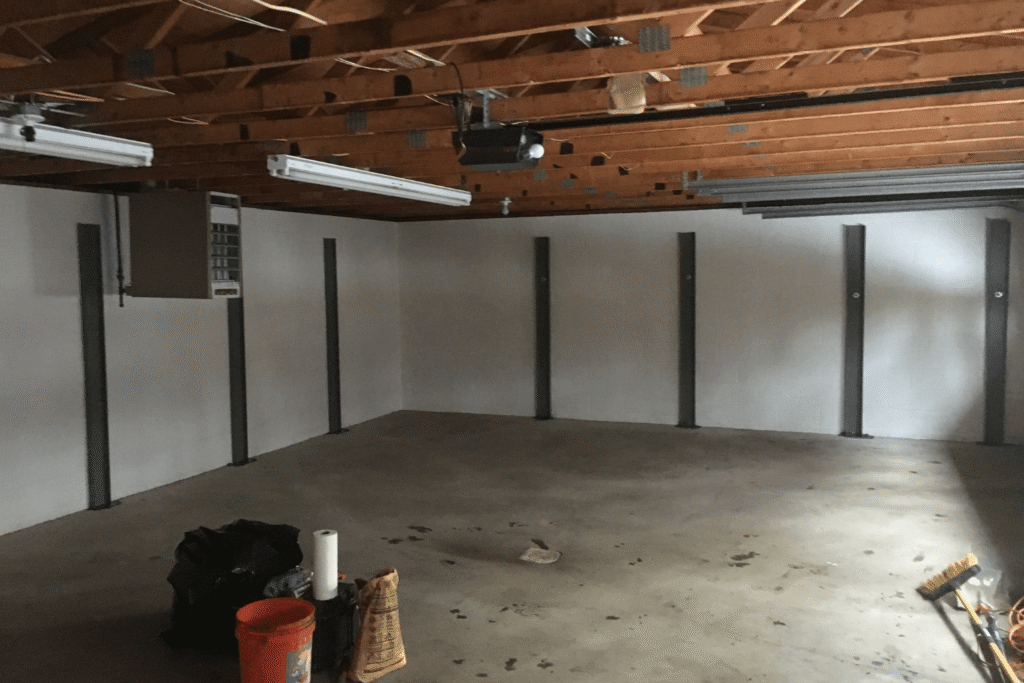
One of the most effective long-term solutions is wall anchor installation. Wall anchors work by stabilizing the foundation wall and gradually pulling it back toward its original position. Anchors extend from the inside of the basement wall into stable soil outside, counteracting lateral pressure.
Unlike surface-level fixes, structural reinforcement systems are designed to permanently stop inward movement.
Other methods, such as carbon fiber straps, may help with very early-stage movement, but they do not provide the same level of corrective force as wall anchors for moderate to severe bowing.
Choosing the correct repair depends on the amount of movement, wall material, and soil conditions.
Why Ignoring Bowing Walls Is Risky
Some homeowners delay repairs because the wall appears stable for months or even years. However, foundation movement rarely reverses on its own.
Each season of saturated soil increases pressure. Over time, cracks widen, structural connections weaken, and repair costs rise.
Addressing bowing basement walls early typically results in less invasive repairs and better long-term stability.
Protect Your Foundation Before the Damage Progresses
If you’ve noticed inward movement, horizontal cracking, or uneven basement walls, it’s important to act before structural damage advances further.
Basement wall bowing repair is not just cosmetic; it protects the integrity of your entire home.
AM Wall Anchor & Waterproofing specializes in stabilizing foundations throughout Western Pennsylvania using proven structural solutions designed for our region’s soil and climate conditions.
If you suspect your basement walls are bowing, schedule a professional inspection today. Early intervention can prevent major structural repairs later.