
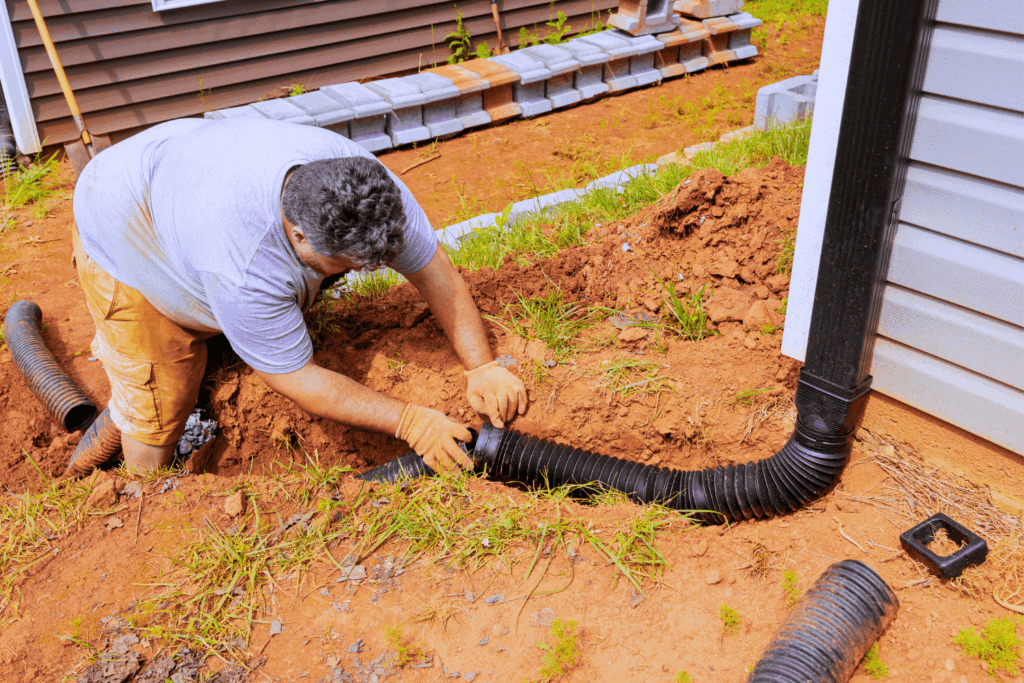
When it comes to basement waterproofing, most homeowners focus on interior solutions, such as sump pumps or wall crack repairs; however, exterior factors often play a significantly larger role. Some of the most powerful defenses against basement water intrusion actually exist outside the home, starting with how your yard slopes and where your downspouts discharge.
Poor grading and misdirected downspouts are two of the most overlooked contributors to basement moisture problems. Fortunately, they’re also two of the easiest to fix. In this post, we’ll explain why proper yard grading and downspout drainage matter, how to identify problems, and what steps to take to protect your foundation long-term.
Why Yard Grading Matters More Than You Think
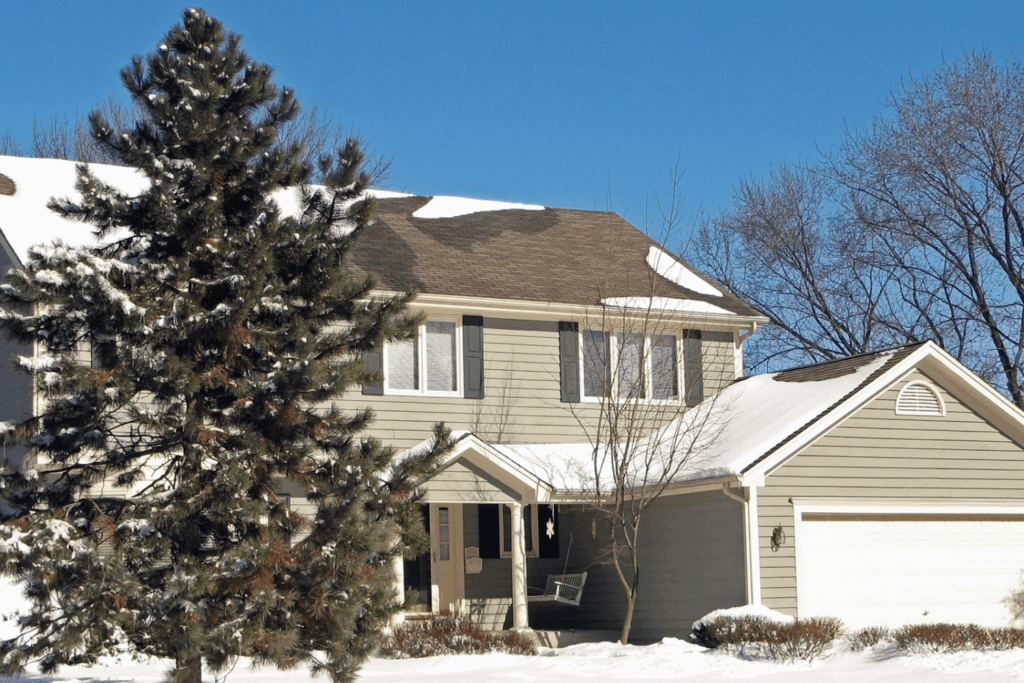
Yard grading for drainage refers to the slope of the land around your home’s foundation. Ideally, the ground should slope away from your home so that water flows away from the foundation walls instead of pooling beside them.
When the grade is too flat, or worse, angled toward the house, rainwater and snowmelt collect near the base of your foundation. Over time, this buildup increases hydrostatic pressure on basement walls and can lead to:
- Wall cracks or bowing
- Water seepage through floor joints
- Mold and mildew development
- Long-term structural damage
Many older homes in Western PA suffer from settled soil or landscapes that have shifted over time, unintentionally creating drainage problems that weren’t there when the home was built.
How to Tell If Your Yard Grading Is a Problem
You don’t need special tools to spot bad grading. Walk around your home and look for:
- Soil that slopes toward the foundation
- Pooled water after rainstorms near basement walls
- Exposed foundation or erosion at the base of your home
- Water stains or moss growth on the exterior of basement walls
If you’re unsure, you can use a level and a straight board (at least 10 feet long) to test slope. Ideally, the ground should drop at least 6 inches over the first 10 feet away from your home.
The Role of Downspouts in Foundation Health
Even with ideal grading, improperly placed or poorly maintained downspouts can still cause serious water problems around your foundation. Downspouts are designed to carry roof runoff away from the house, but if they discharge too close, that water gets dumped right where you don’t want it.
Common downspout drainage problems include:
- Splash blocks that don’t extend far enough
- Missing or broken extensions
- Downspouts dumping directly onto concrete pads near the home
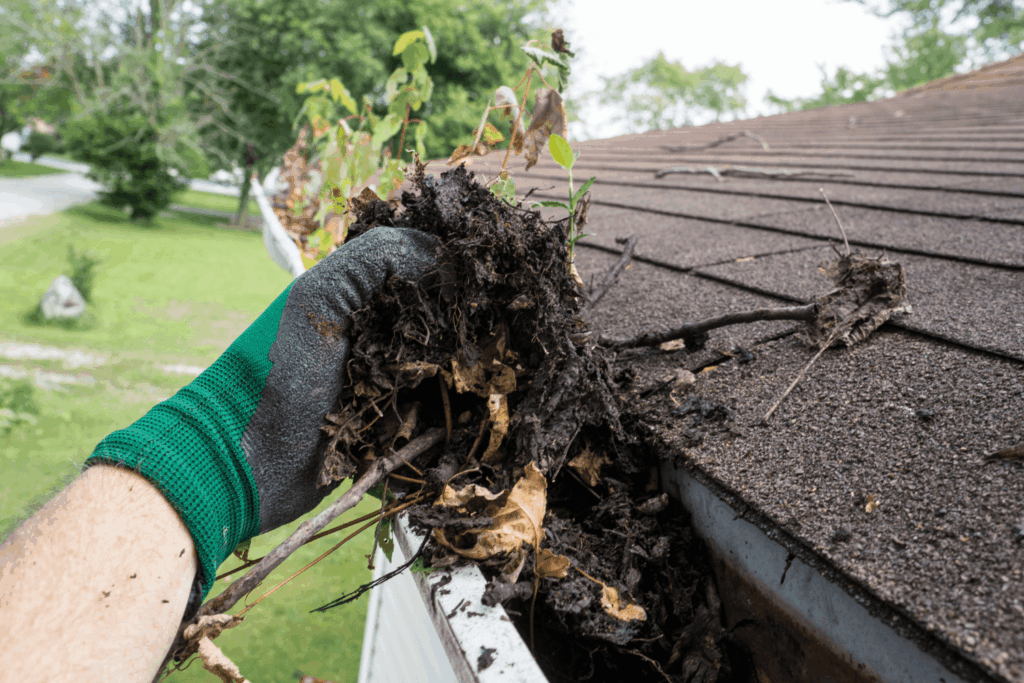
- Blockages inside the gutter or downspout that cause overflow
- Extensions that slope back toward the foundation
Every inch of rain on a 1,000-square-foot roof can produce over 600 gallons of water. Without proper redirection, that water puts immense stress on your foundation.
Signs Your Downspouts Are Causing Water Problems
Look for the following clues that your downspouts may be contributing to basement water issues:
- Consistent moisture on interior basement walls near downspouts
- Vertical staining or water trails on your home’s siding
- Pools of water at the base of your home after storms
- Erosion or sinking ground where downspouts release water
If you notice any of these issues, especially during wet months, it’s time to reassess how water is moving around your property.
How to Fix Grading and Downspout Issues
Addressing these problems doesn’t always require a full excavation or expensive system. Often, a few simple changes can drastically reduce basement leak risks.
Yard Grading Fixes:
- Add compacted soil along the foundation to restore slope
- Use clean topsoil, not mulch or loose fill, for stability
- Avoid piling soil too high: it should stay below siding or brick lines
- Regrade any depressions caused by landscaping or settling
For severe grading issues or large slopes, you may need professional regrading or yard drainage system installation (such as swales or curtain drains).
Downspout Adjustments:
- Extend all downspouts at least 4–6 feet away from the foundation
- Use solid or corrugated pipe extensions that slope away from the house
- Install pop-up emitter drainage solutions for underground downspout lines
- Regularly clean gutters and inspect downspouts for blockages
In some cases, routing downspouts into a buried drain line that connects to a dry well or storm drain is the most effective long-term solution.
Why These Problems Are Common in Western PA
Western Pennsylvania’s climate and landscape present a unique challenge. The region’s heavy clay soil holds water longer, creating greater hydrostatic pressure after rainfall. Older homes may have outdated or insufficient drainage design, and shifting terrain over time often leads to subtle grading problems that homeowners don’t catch until moisture appears inside.
Combined with freeze-thaw cycles, these environmental factors make proper yard grading and downspout drainage critical for basement protection.
Don’t Let Surface Water Become a Basement Problem
Basement waterproofing doesn’t start inside; it starts at the surface. Yard grading for drainage and functional downspout systems are two of the most cost-effective and impactful ways to protect your home’s foundation.
If your home has poor drainage, shifting soil, or downspouts that discharge too close to the foundation, it’s not a question of if water will find its way in, it’s a matter of when.
AM Wall Anchor & Waterproofing can help assess your exterior drainage and recommend effective solutions to prevent water before it becomes a problem. Whether it’s regrading, drainage system installation, or foundation repair, we’ve got your home covered, inside and out.