

A few cracks in your basement floor might seem like no big deal, just part of a home settling over time. But depending on the cause, some cracks can signal serious problems lurking beneath the surface.
Understanding the difference between cosmetic and structural cracks is key to protecting your home. In this guide, we’ll explain what causes basement floor cracks, how to recognize red flags, and what to do if you spot them.
Common Causes of Basement Floor Cracks
Concrete is strong, but it’s not immune to movement, water, or pressure. Here are the most common causes behind basement floor cracking:
Shrinkage During Curing
As concrete cures, it naturally contracts. This often results in thin, surface-level cracks, typically less than 1/8 inch wide, that don’t indicate deeper issues.
Soil Settlement or Shifting
If the soil beneath your basement slab moves, the concrete may sink or crack. This is often caused by poor soil compaction during construction or long-term erosion.
Hydrostatic Pressure
Water pressure beneath the slab, especially during wet seasons or when drainage is poor, can force cracks to open, buckle, or even cause heaving.
Frost Heave (in seasonal climates)
In colder regions, freezing and thawing cycles can expand moisture beneath the slab and push it upward, leading to cracking or uneven surfaces.
Tree Root Intrusion
While less common beneath basement slabs than around foundation walls, roots from nearby trees can disrupt the soil under your home, especially in older properties.
When Are Basement Floor Cracks Just Cosmetic?
Some cracks are relatively harmless and may not require repair. These typically:
- Are less than 1/8″ wide
- Don’t change over time
- Appear as straight or hairline cracks
- Don’t allow water seepage
- Occur soon after the home was built
Even cosmetic cracks should be monitored, but they don’t usually impact structural integrity.
When Floor Cracks Indicate Bigger Foundation Problems
Cracks in the basement floor can be a symptom of deeper issues, especially if you notice any of the following:
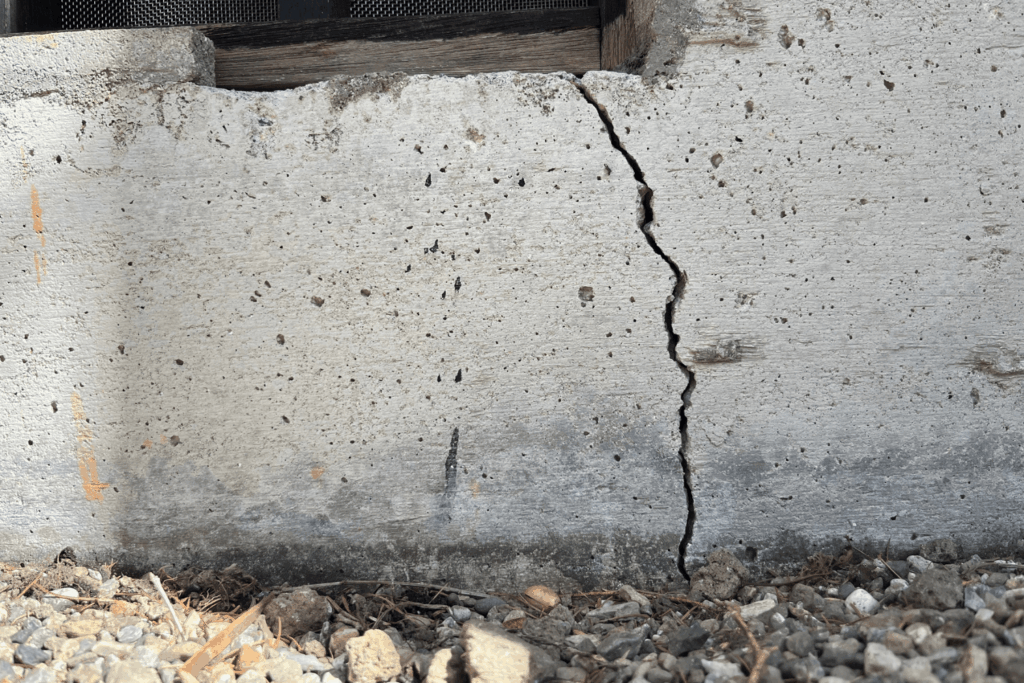
Cracks Wider Than 1/4 Inch
These could suggest active movement in the foundation or subsoil.
Uneven or Raised Slab Areas
This may be a sign of hydrostatic pressure or frost heave forcing the slab upward.
Water Seepage Through Cracks
Any water intrusion indicates drainage failure and increasing pressure below the slab.
Cracks Accompanied by Wall or Ceiling Damage
If floor cracks appear along with wall separation, drywall cracks, or ceiling gaps, the issue may involve the entire foundation, not just the slab.
Cracks That Worsen Over Time
Expanding cracks are never cosmetic. They require immediate evaluation by a foundation expert.
Can Foundation Cracks in the Basement Spread from the Floor?
Yes. While some cracks are limited to the slab, others may result from deeper foundation cracks in the basement, particularly in the footings or walls.
These types of cracks are more than surface damage; they can impact structural integrity and lead to:
- Water intrusion
- Mold growth
- Uneven floors in upper stories
- Foundation settling or shifting
That’s why it’s critical to diagnose the origin of the crack, not just patch the surface.
What Should You Do If You See Cracks in Your Basement Floor?
Here’s a quick step-by-step guide:
Measure the Width

Use a ruler to determine if the crack is under or over 1/8 inch.
Check for Water
Look for signs of dampness, staining, or active leaks during rainy periods.
Note the Location and Pattern
Spider web cracks are often cosmetic. Long, wide, jagged, or intersecting cracks may suggest movement or pressure.
Monitor for Changes
If the crack is expanding or shifting over time, contact a professional.
Schedule an Inspection
A foundation specialist can assess the type and severity of the crack and recommend whether repair is necessary.
Repair Options for Basement Floor Cracks
Depending on the type of crack, your contractor may recommend:
- Epoxy injection (for structural cracks)
- Urethane crack sealing (for water intrusion)
- Slab stabilization (for settlement issues)
- Interior drain tile system (if drainage is a root cause)
- Foundation underpinning or piering (for severe structural shifting)
Don’t DIY foundation repairs; improper fixes can hide or worsen the problem.
Don’t Ignore Cracks Beneath Your Feet
Basement floor cracks may seem minor, but they can point to serious problems, from soil movement to water damage to structural failure. The key is knowing when a crack is just cosmetic, and when it’s a red flag.
If you’re seeing cracks in your basement floor, or if existing cracks are growing or letting in water, it’s time to call the professionals.
AM Wall Anchor & Waterproofing provides expert inspections, honest recommendations, and customized solutions to keep your basement and your foundation safe and dry.
Don’t wait for cracks to get worse. Schedule your inspection today.