
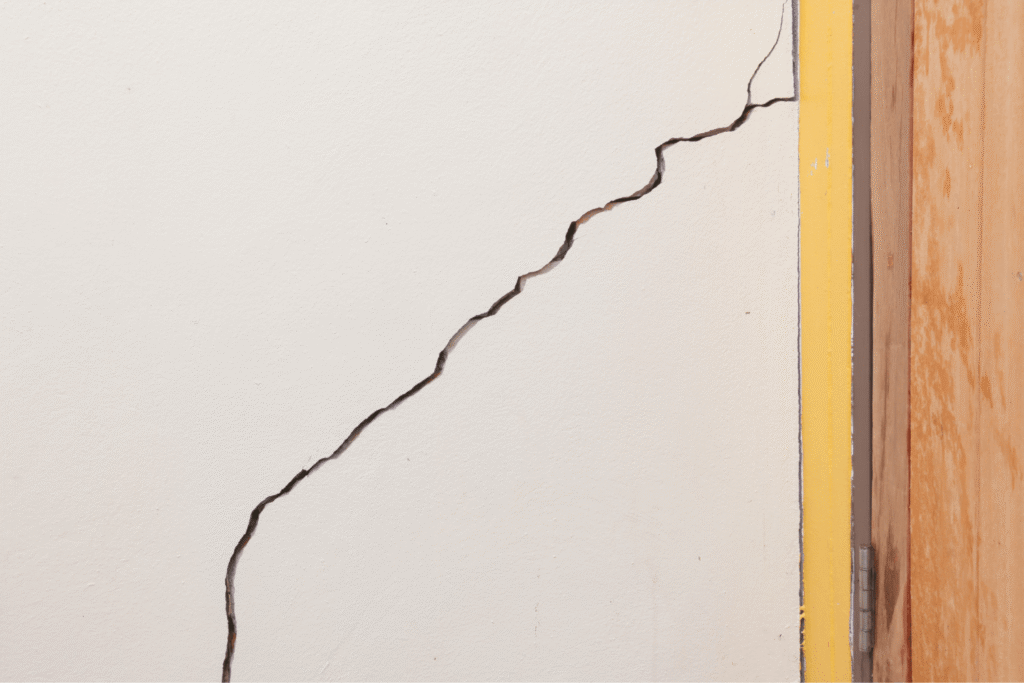
Not all foundation cracks are created equal. While small vertical cracks are often caused by normal settling, horizontal cracks in basement walls are a different story entirely.
If you’ve noticed a long, horizontal line forming along your basement wall, it’s natural to wonder how serious it is and whether it can wait. In many cases, these cracks are an early warning sign of structural pressure that can worsen over time.
Understanding what causes horizontal cracks and when they become dangerous can help you protect your home before the damage progresses.
What Causes Horizontal Cracks in Basement Walls?
Horizontal cracks are typically caused by lateral pressure from the soil outside your foundation.
When soil becomes saturated with water, especially during snow melt and spring rain, it expands and becomes heavier. This creates hydrostatic pressure that pushes inward against basement walls. Over time, that pressure can exceed what the wall is designed to handle.
Instead of cracking vertically from settling, the wall begins to bend inward, creating a horizontal fracture along its weakest point, often near the middle of the wall.
In Western Pennsylvania, clay-heavy soil makes this issue more common. Because clay retains water and expands significantly, it places sustained pressure on foundation walls long after rain or snow melt has occurred.
Why Horizontal Cracks Are More Concerning Than Vertical Ones
Vertical cracks are often the result of natural settling and are typically less concerning if they remain small and stable. Horizontal cracks, however, are usually a sign that your wall is under active stress.
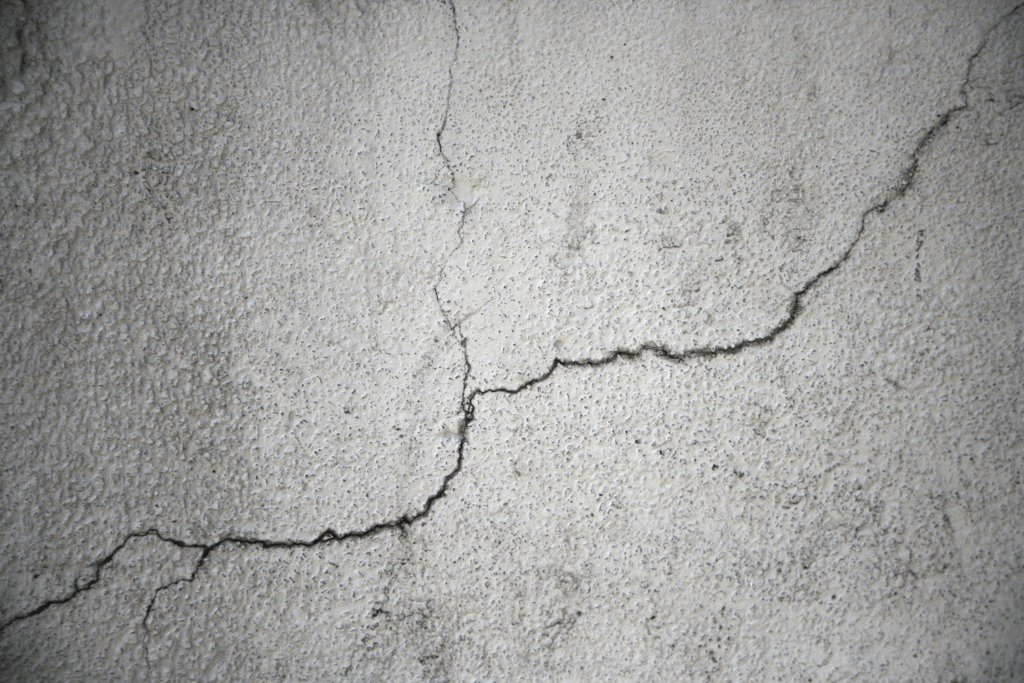
A horizontal crack suggests that the wall is not just separating, it’s moving.
This type of movement can lead to:
- Inward bowing of the wall
- Widening cracks over time
- Structural weakening of the foundation
- Increased risk of water intrusion
Because the force causing the crack is ongoing, the condition rarely improves without intervention.
How to Tell If a Horizontal Crack Is Getting Worse
In many cases, horizontal cracks start small and gradually become more noticeable. Monitoring changes over time is important.
Signs that the issue may be progressing include a crack that appears longer than before, begins to widen, or is accompanied by slight inward curvature of the wall. You may also notice moisture entering along the crack, or difficulty opening basement doors or windows due to shifting.
Even subtle changes can indicate that pressure is continuing to build behind the wall.
When a Horizontal Crack Becomes Structurally Dangerous
Not every crack requires immediate structural repair, but horizontal cracks should always be taken seriously.
As a general rule, the risk increases when:
- The crack widens beyond a hairline
- The wall shows visible inward movement
- Multiple horizontal cracks appear
- The crack runs across a large section of the wall
At this stage, the wall may no longer be able to resist external pressure on its own. Without reinforcement, continued movement can lead to significant structural damage.
Why Spring Conditions Make Cracks Worse
Late winter and early spring are often when homeowners first notice horizontal cracks, or realize they’ve worsened.
Snow melt saturates the soil, increasing hydrostatic pressure. At the same time, freeze–thaw cycles may have already weakened mortar joints and expanded small cracks during winter.
As pressure builds, previously stable cracks can begin to shift or grow. This is why many foundation issues seem to “appear” suddenly in spring, even though they’ve been developing over time.
How Horizontal Cracks Are Repaired
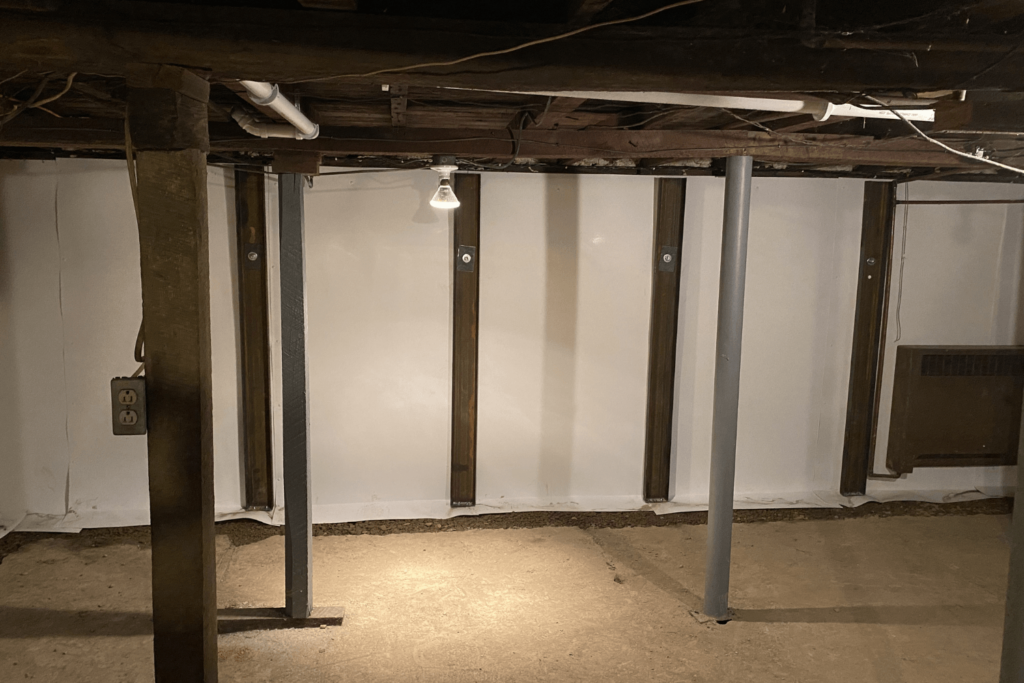
Repairing horizontal cracks requires addressing the underlying structural pressure, not just sealing the surface.
In many cases, wall anchor systems are used to stabilize the foundation. These systems counteract the pressure from the surrounding soil and prevent further inward movement. Over time, they can also help restore the wall toward its original position.
Other methods, such as carbon fiber reinforcement, may be used in early stages, but they do not provide the same level of corrective strength in more advanced cases.
The appropriate solution depends on the severity of the movement and the condition of the wall.
Why It’s Risky to Wait
It can be tempting to monitor a crack and “see if it gets worse,” especially if there are no immediate signs of damage. However, horizontal cracks are rarely static.
Because the pressure behind the wall is ongoing, delaying repair allows the problem to progress. What may be a minor structural issue today can become significantly more complex (and more expensive) over time.
Addressing the issue early helps prevent further movement and reduces the likelihood of major structural repairs.
Our Advice: Don’t Ignore Horizontal Cracks
Horizontal cracks in basement walls are more than cosmetic, they’re a signal that your foundation is under stress.
If you’ve noticed a horizontal crack forming or worsening, it’s important to take it seriously and understand what’s causing it. Early evaluation can make the difference between a straightforward repair and a major structural issue.
AM Wall Anchor & Waterproofing helps homeowners throughout Western PA diagnose and stabilize foundation problems with proven solutions designed for local conditions. If you’re concerned about cracks in your basement walls, scheduling an inspection now can help protect your home long-term.