
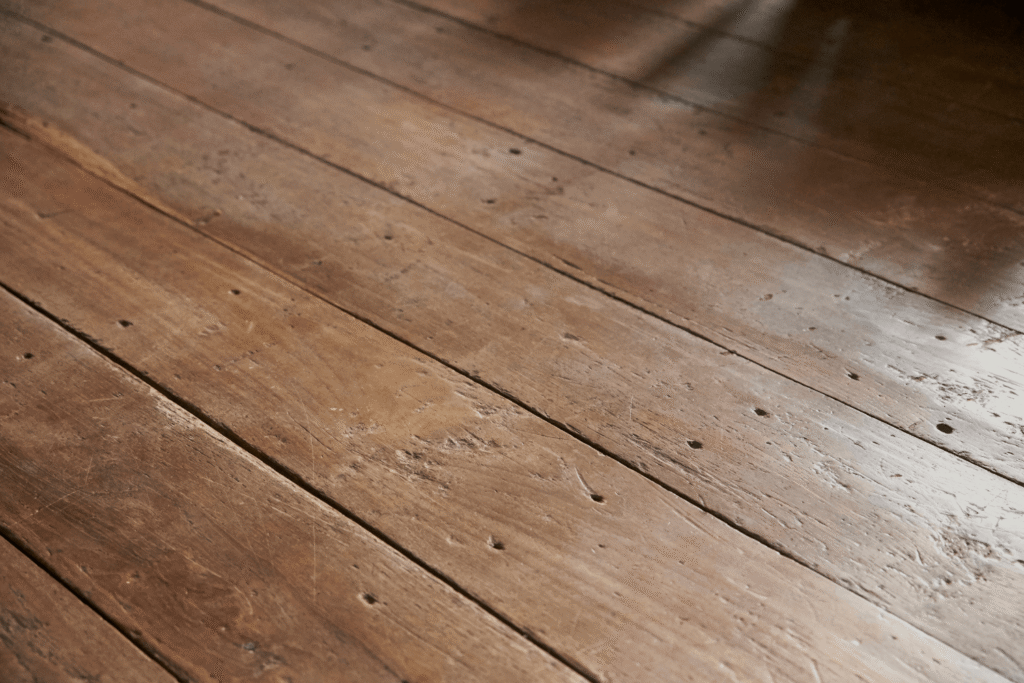
Floors are supposed to feel solid underfoot. So when a room feels sloped, springy, soft, or bouncy, it is natural to wonder whether something serious is happening beneath the home.
Uneven or bouncy floors can have several causes. In some older homes, a small amount of movement may be related to the original construction or age of the house. In other cases, floors change because moisture has affected the framing below, support beams have shifted, or the foundation is moving. The key is paying attention to whether the problem is new, getting worse, or showing up alongside other warning signs.
What Is The Difference Between Uneven And Bouncy Floors?
These terms are often used together, but they can describe different experiences.
An uneven floor may feel tilted, dipped, or sloped. A marble might roll toward one side of the room, furniture may no longer sit level, or there may be a visible low spot near a wall or doorway.
A bouncy floor flexes when someone walks across it. It may feel springy in one location or throughout a room. Some bounce can result from the way a floor system was originally designed, especially when joists span longer distances. New or worsening movement should not be dismissed without understanding why it is happening.
Both patterns can be connected to the structure below the flooring, including joists, beams, posts, the crawl space, or the foundation.
Moisture In The Crawl Space Or Basement
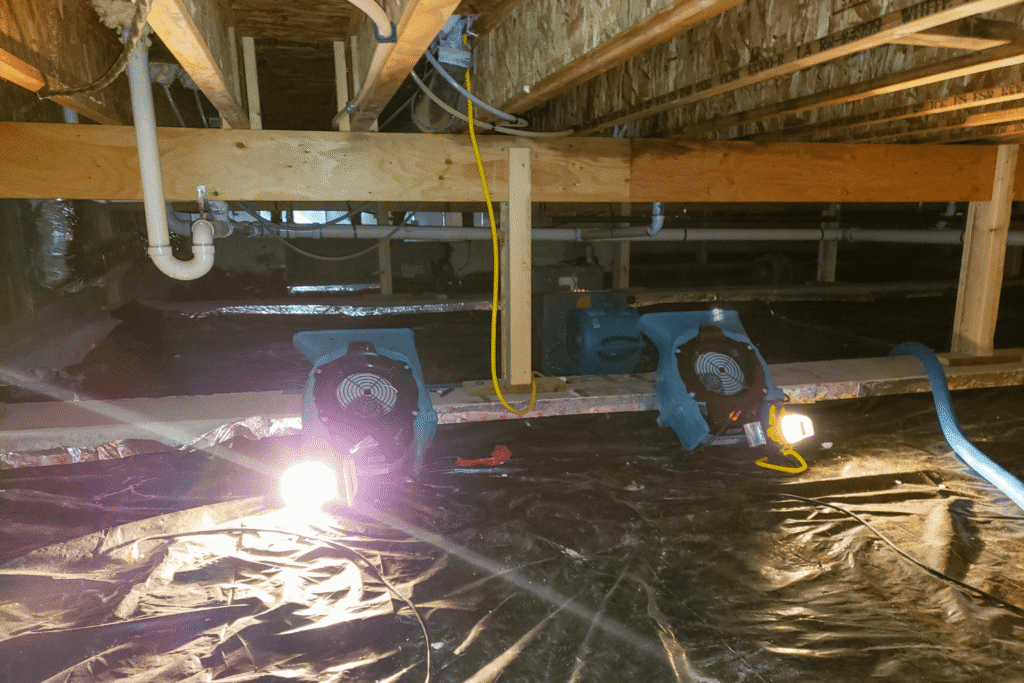
One common reason floors become uneven or bouncy is moisture beneath the home. Crawl spaces and basements are close to soil and groundwater, which makes them more vulnerable to high humidity, water intrusion, and poor drainage.
Wood floor joists and support beams can weaken over time when they are repeatedly exposed to moisture. The wood may warp, deteriorate, or lose strength. As support components become less stable, the floor above can begin to sag or flex when walked on.
Common clues that moisture may be part of the problem include:
- A musty smell on the first floor or near a crawl space entry
- Dampness, water staining, or standing water in the crawl space or basement
- Wet or sagging insulation beneath the floor
- Mold or visible deterioration on wood framing
- Floors that feel soft or bouncy near bathrooms, kitchens, or exterior walls
A damp crawl space can affect more than the space beneath the home. Moisture may contribute to poor air quality, colder floors, higher energy use, and damage to the wooden members that support the living area.
Weak Or Shifting Supports
Floor systems depend on a network of joists, beams, posts, and footings to carry the weight of the home. If a support beam sags, a post settles, or soil beneath a support shifts, the floor above can become uneven.
The issue may be more noticeable in one area of the home. For example, a low spot near the center of a room may relate to a support concern below that location. A consistent slope across an entire room or wing may indicate that one side of the home has moved differently than the other.
Signs that support components may need attention include:
- A floor that is increasingly sloped or visibly sagging
- Cracks in drywall near doorways, ceilings, or interior corners
- Doors that stick, drag, or no longer latch properly
- Gaps between flooring and baseboards
- Support posts or beams that appear out of level in an accessible basement or crawl space
These symptoms can be related to age, moisture damage, or foundation movement. A professional inspection is the best way to understand which factor, or combination of factors, is affecting the home.
Foundation Settlement And Soil Movement
The foundation supports the entire home. When soil shifts, settles, becomes saturated, or loses support, the foundation can move unevenly. Floors may then slope or feel uneven because the structure is no longer sitting exactly as it once did.
Foundation settlement is not always dramatic. It may happen gradually and show up first as small changes inside the house. An old crack may widen, a door may begin to stick, or one part of the floor may feel lower than it did a year ago.
Western Pennsylvania homes can face changing soil moisture through heavy rain, seasonal snowmelt, dry stretches, and freeze-thaw weather. These conditions can affect the soil around and beneath foundations. They do not automatically mean a home has a severe foundation issue, but they make recurring or changing floor problems worth investigating.
Problems With Floor Joists
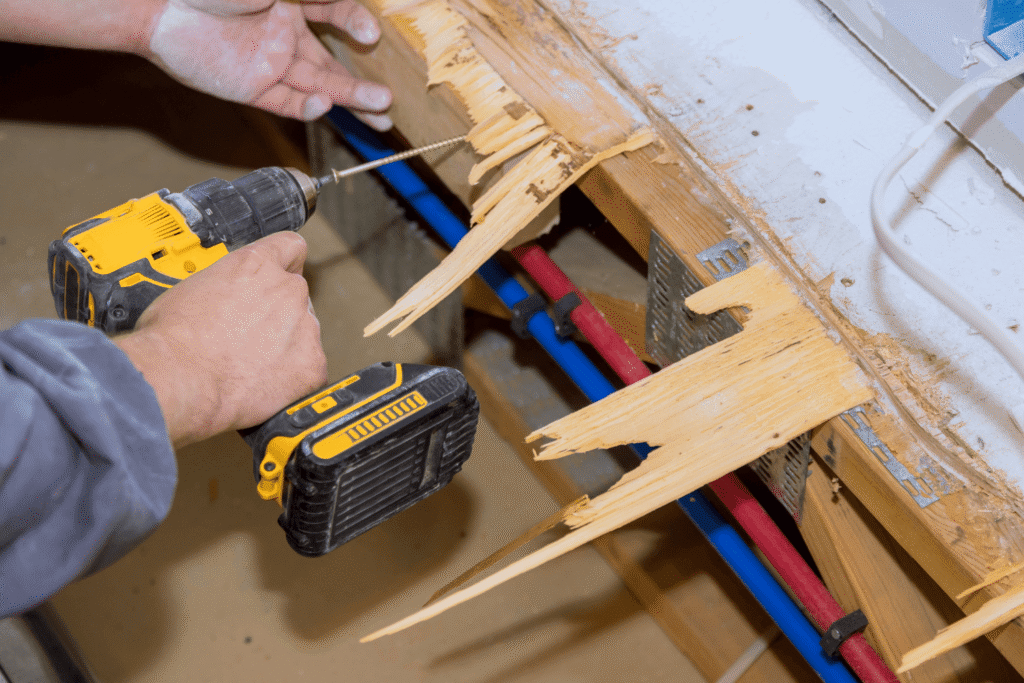
Floor joists are the horizontal supports beneath the finished floor. They carry the weight of furniture, people, walls, and everyday activity. When a joist is damaged, undersized, altered, or weakened by moisture, it can lead to movement in the floor above.
Bouncy floors may be most noticeable when movement is concentrated in one section of a room, the floor flexes in a high-traffic path, or soft spots develop between support points. Homeowners may also notice the issue near kitchens, bathrooms, or exterior walls where moisture may be more likely to affect nearby materials.
It is best not to attempt to diagnose or reinforce floor framing without a full evaluation. The underlying cause could be a joist issue, a moisture issue, a support concern, or foundation movement. Adding a temporary support without understanding the entire system can leave the root problem unresolved.
When Uneven Or Bouncy Floors Need Attention
A floor that has felt slightly uneven for years may not be an emergency. What matters most is whether the issue is changing or appears alongside other signs of movement or moisture.
A professional inspection is a good idea when there is:
- A new dip, slope, or bounce that becomes more noticeable over time
- Sudden changes in doors, windows, cracks, or trim gaps
- Water, high humidity, mold, or a musty odor below the affected floor
- Soft spots that feel weak underfoot
- Sagging or damaged-looking beams, joists, or support posts
- Basement walls that crack, bow, or show recurring moisture nearby
A qualified inspector can examine the floor system, crawl space or basement, drainage conditions, and foundation. The goal is not simply to make the floor feel level again. It is to identify what is causing the movement and recommend an appropriate long-term plan.
Do Not Assume It Is Just An Old House
Age can explain some quirks in an older home, but it should not be used to excuse an active problem. A floor that is newly uneven, increasingly bouncy, or accompanied by moisture and structural changes deserves a closer look.
A.M. Wall Anchor & Waterproofing provides foundation repair, basement waterproofing, crawl space repair, drainage services, wall-anchor installation, and related basement repair solutions. This allows the team to consider the possible causes of uneven or bouncy floors rather than treating a single symptom in isolation.
For homeowners in Western Pennsylvania, a professional inspection can provide clear answers about what is happening below the floor and what should be addressed to protect the comfort, stability, and long-term condition of the home. Contact us today to get your no cost inspection scheduled.