

At first glance, many foundation cracks don’t seem urgent. They may be small, dry, or unchanged for long periods of time. But the reality is that deciding whether you can ignore a crack isn’t always straightforward.
Understanding when to worry about foundation cracks can help you avoid turning a manageable issue into a costly structural repair.
Are All Foundation Cracks a Problem?
Not every crack signals serious structural damage. In fact, some minor cracking can occur naturally as a home settles over time.
Hairline vertical cracks, especially in newer homes, are often the result of normal settling or concrete curing. These types of cracks may remain stable and not require immediate repair.
However, the challenge for homeowners is that not all cracks stay minor, and it’s not always obvious which ones will worsen.
Why Cracks Shouldn’t Be Ignored
Even if a crack appears small, it’s important to understand what it represents. A foundation crack is not just a surface issue, it’s a sign that your home has experienced movement or pressure. In many cases, that pressure hasn’t stopped.
So while you technically can ignore some cracks in the short term, doing so means taking a risk. Over time, soil conditions, moisture levels, and seasonal changes can continue to affect your foundation, causing cracks to expand or new ones to form.
When to Worry About Foundation Cracks
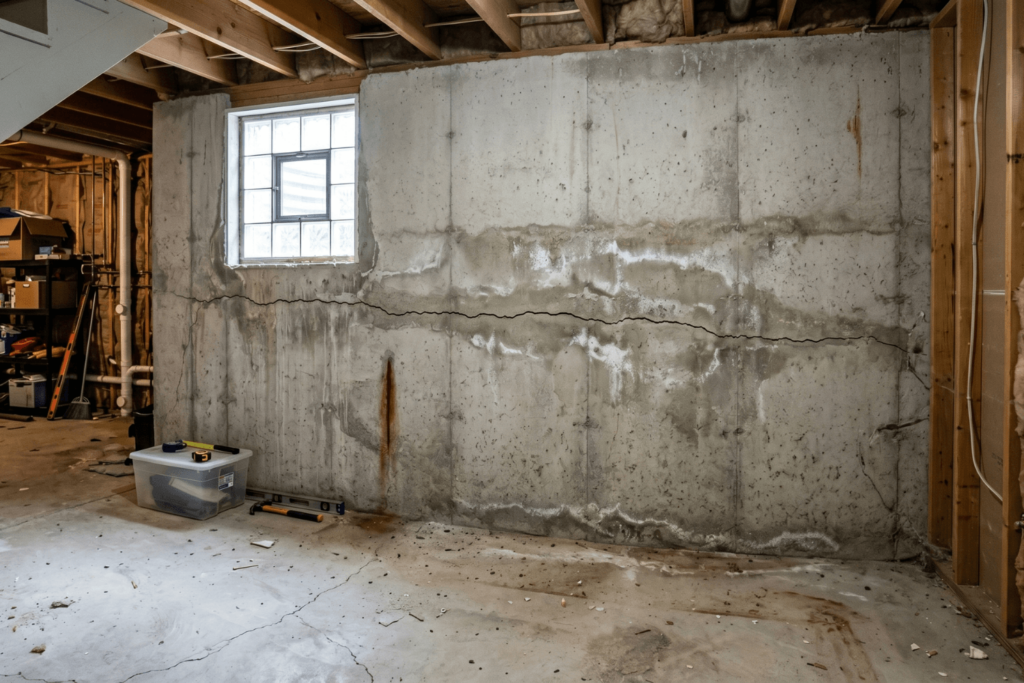
Certain types of cracks are more likely to indicate structural concerns and should be evaluated sooner rather than later.
Horizontal cracks, for example, are often caused by lateral pressure from saturated soil pushing against basement walls. These are typically more serious than vertical cracks and may signal wall movement.
Stair-step cracks in block foundations can also indicate shifting or uneven pressure. If cracks appear to be widening, lengthening, or spreading to new areas, it’s a sign that the issue is progressing.
Cracks that allow water intrusion, especially during rain or snow melt, are another clear indicator that the foundation is under stress.
What Happens If You Wait Too Long
Waiting to address foundation cracks can lead to more than just cosmetic damage.
As pressure continues to act on the foundation, cracks can grow larger and compromise the structural integrity of the wall. In some cases, this can lead to bowing, shifting, or separation within the foundation.
Water intrusion is also more likely as cracks expand, increasing the risk of moisture damage, mold growth, and humidity issues in the basement.
What may have started as a simple repair can become more complex and costly over time.
Why Spring Conditions Make Cracks Worse
In Western Pennsylvania, foundation cracks often become more noticeable, or more severe, during the transition from winter to spring.
Melting snow and increased rainfall saturate the soil around your home, raising hydrostatic pressure. At the same time, freeze–thaw cycles may have already weakened existing cracks during colder months.
As a result, cracks that seemed stable during winter may begin to shift, widen, or allow water in once spring conditions take hold.
When It Makes Sense to Take Action
Taking action doesn’t always mean committing to major repairs immediately. In many cases, the first step is simply understanding what type of crack you’re dealing with and whether it’s likely to worsen.
If a crack is changing, allowing water in, or appearing alongside other signs, such as bowing walls or sticking doors, it’s worth having it evaluated.
Early assessment allows you to address the issue before it escalates, and in some cases, smaller interventions can prevent the need for larger structural repairs later.
Why Professional Evaluation Matters
Foundation issues are not always easy to diagnose from appearance alone. Two cracks that look similar on the surface may have very different underlying causes.
A professional inspection can determine whether the crack is cosmetic, moisture-related, or structural. More importantly, it can identify whether the conditions causing the crack are still active.
This ensures that any recommended solution addresses the root of the problem, not just the visible symptom.
Waiting Isn’t Always the Safer Option
So, can you ignore a foundation crack? In some cases, temporarily, but not without understanding the risk.
Foundation cracks are often early warning signs. The longer they’re left unaddressed, the greater the chance they will worsen under continued pressure. If you’re unsure whether a crack in your basement is something to worry about, it’s better to find out now than deal with a larger problem later.
AM Wall Anchor & Waterproofing helps homeowners throughout Western PA evaluate foundation cracks and determine the right course of action. If you’ve noticed a crack in your basement, scheduling an inspection can give you clarity and help protect your home long-term.