
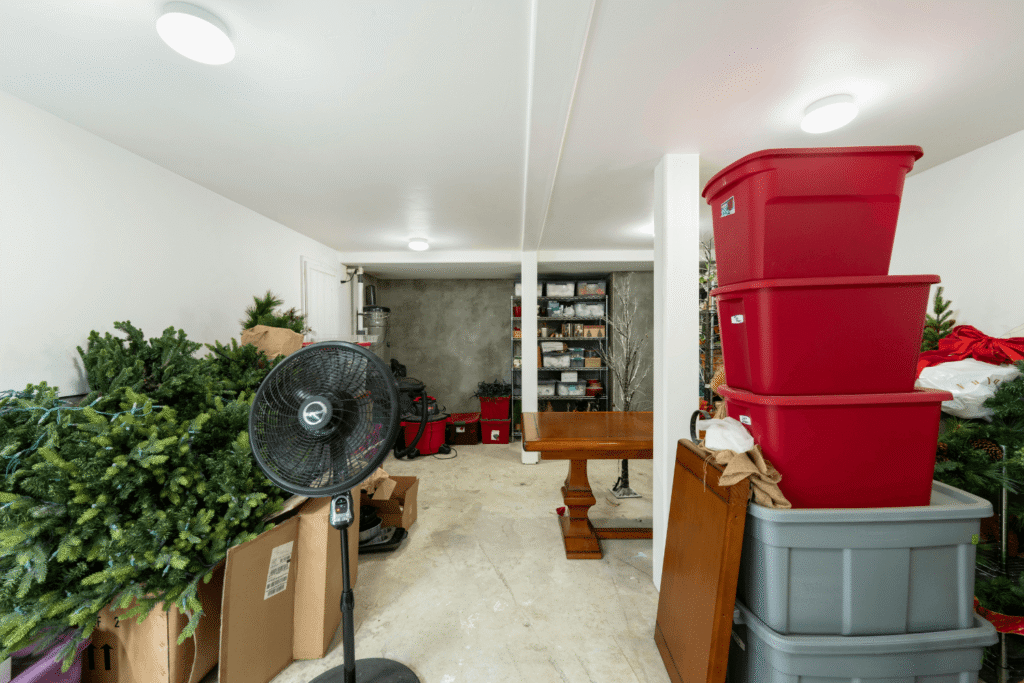
Basements are the natural place to stash everything that does not fit upstairs; holiday decorations, kids’ clothes, extra furniture, and boxes you plan to sort “someday.” But the way you store things in your basement can actually hide early warning signs of moisture problems. By the time you notice mold, ruined belongings, or a musty smell that never goes away, there may already be damage to your walls, floors, or foundation.
This guide walks through common basement storage mistakes, why they matter, and how to store items more safely so you can spot moisture issues before they turn into bigger repairs.
Why Basement Storage Needs Extra Caution
Even in a “dry” home, the basement is closer to soil, groundwater, and exterior walls than any other part of the house. That means:
- Humidity is usually higher.
- Temperatures are cooler, which can lead to condensation.
- Any drainage or waterproofing issues tend to show up there first.
When basements are packed full of boxes and furniture, small leaks, damp spots, and early mold growth are easy to miss. Storage doesn’t just suffer from moisture, it can hide it.
Mistake 1: Storing Cardboard Boxes Directly On The Floor
Cardboard is one of the worst materials you can put on a basement floor. It acts like a sponge, soaking up any moisture from damp concrete, minor seepage, or even seasonal humidity. Once it absorbs water, it stays damp for a long time and becomes a perfect home for mold and mildew.
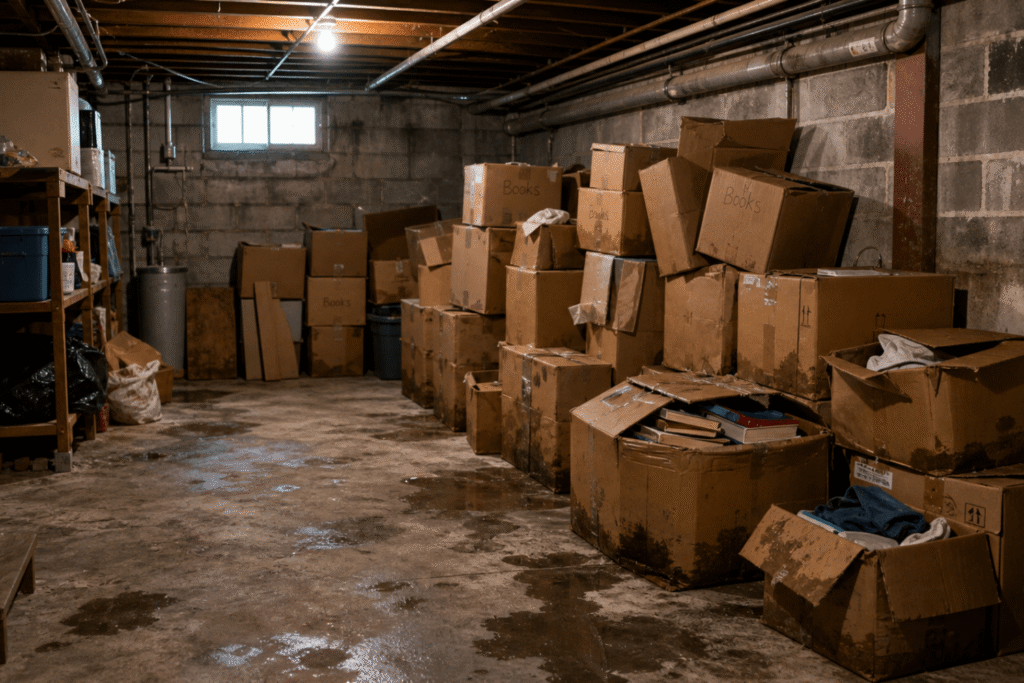
Why it’s a problem:
- Moisture can wick up unnoticed into books, photos, clothes, and keepsakes.
- Mold can grow inside boxes where you never see it.
- Damp cardboard can mask small puddles or seepage along walls and in corners.
Better approach:
Use plastic storage bins with tight-fitting lids, and keep them off the floor on shelves, pallets, or sturdy racks. Clear bins also make it easier to see if anything inside is affected.
Mistake 2: Pushing Furniture And Boxes Tight Against Basement Walls
It can be tempting to line every wall of the basement with shelves, couches, or stacked boxes. The problem is that those items prevent air from circulating and block your view of the walls.
Why it’s a problem:
- You can’t see new cracks, water stains, or efflorescence (that white, chalky residue that appears when water moves through concrete).
- Moisture trapped between the wall and stored items can lead to hidden mold.
- Early signs of seepage along the wall-floor joint can be completely covered.
Better approach:
Leave a small gap between storage and the walls; ideally a few inches. This allows air to move, makes it easier to see what’s happening behind your belongings, and gives you a clear view during quick inspections after heavy rain.
Mistake 3: Storing Soft Materials In A Damp Or Musty Basement
Certain items are especially vulnerable to basement moisture:
- Clothes, linens, and bedding
- Upholstered furniture and mattresses
- Paper files, books, and photo albums
- Area rugs and carpets
These materials absorb moisture quickly and can start to smell musty even if you don’t see visible water. Once mold takes hold in fabrics or upholstery, it’s very difficult to remove completely.
Why it’s a problem:
- Mold in stored items releases spores into the air, which can affect indoor air quality throughout the home.
- You may not realize how damp the basement really is until everything smells, and by then the problem has spread.
Better approach:
If the basement has a history of dampness, avoid storing these items there at all. If you must, use sealed plastic containers and check them regularly for any signs of moisture or odor.
Mistake 4: Covering The Floor With Carpets Or Large Rugs
Area rugs and leftover carpet pieces make a basement feel more finished, but they also trap moisture against the concrete. If water seeps up from below or in from the sides, it can sit unnoticed under the rug and feed mold growth.
Why it’s a problem:
- You may not see or feel the dampness until the carpet is already moldy on the underside.
- Odors can spread even if the top of the rug looks clean.
- Hidden moisture under carpeting can damage the concrete surface and anything stored on top.
Better approach:
If you want a softer surface, consider removable, breathable floor coverings designed for basements, and be sure to lift and check underneath them periodically. Avoid permanently gluing carpet directly to a concrete basement floor that is not professionally waterproofed.
Mistake 5: Ignoring “Just A Little” Rust, Staining, Or Odor In Storage Areas
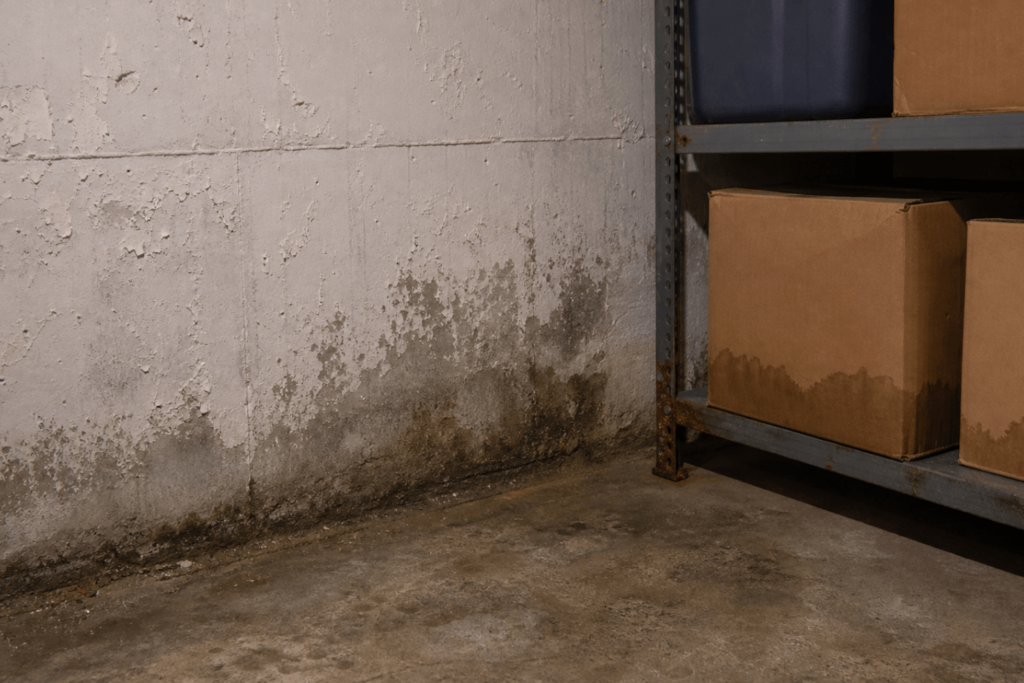
When a basement is crowded, it’s easy to overlook small clues that something is wrong:
- Rust on the bottoms of metal shelving units or filing cabinets
- Dark stains on the lower edges of cardboard boxes
- A musty smell in one corner or closet
- Peeling paint or discoloration low on the walls
These minor changes often show up in storage zones first, because that’s where items sit undisturbed for long periods.
Why it’s a problem:
- These subtle signs may be the first indication of moisture intrusion or chronic humidity issues.
- By the time water is obvious, there may already be hidden damage behind stored items.
Better approach:
Take any recurring musty smell, rust, or staining seriously. Use storage reorganization as a chance to check walls, corners, and floors carefully. If you uncover dampness, efflorescence, or mold, it’s time to talk to a basement waterproofing professional rather than simply rearranging boxes.
Mistake 6: Treating Dehumidifiers As The Only Solution
A dehumidifier can be very helpful in a basement that is basically dry but naturally humid. The mistake comes when homeowners rely on dehumidifiers to “fix” water intrusion problems.
Why it’s a problem:
- A dehumidifier can mask serious issues like seepage through walls or floor cracks.
- If water is actively entering the basement, the unit will run constantly but never solve the source of the moisture.
- Storage may still get wet when the system can’t keep up during storms.
Better approach:
Use dehumidifiers as a support tool, not a cure-all. If the machine is running nonstop, the bucket fills quickly, or the basement still smells musty despite using it, moisture may be coming from the structure or soil, not just the air. That calls for a professional inspection.
Smarter Basement Storage Habits
You don’t have to empty your basement to use it safely. A few smart habits can keep storage from hiding real problems:
- Use plastic bins instead of cardboard, and label them clearly.
- Keep items on shelves or platforms instead of directly on the floor.
- Maintain a clear gap between storage and walls so you can see cracks or stains.
- Do a quick wall-and-floor walk-through at least a couple of times a year, and after major storms.
- Trust your nose: if an area smells damp or musty, investigate rather than ignore it.
These simple steps protect your belongings and make it much easier to spot early warning signs of moisture or foundation issues.
When Basement Storage Problems Point To Something Bigger
If reorganizing your basement reveals damp walls, stained concrete, efflorescence, or moldy boxes and furniture, there is likely more going on than just “poor storage.” Those are signs that water is getting into the basement or humidity is staying too high for too long.
At that point, the priority should shift from cleaning up to finding out why it’s happening. A basement waterproofing and foundation specialist can evaluate the space, identify where moisture is coming from, and recommend the right solution before more of your home and belongings are affected.
For homeowners in Western Pennsylvania, that kind of inspection can give peace of mind, whether the fix is a simple drainage improvement or a more complete waterproofing and foundation plan. Give A.M. Wall Anchors & Waterproofing a call today to schedule your free estimate.