
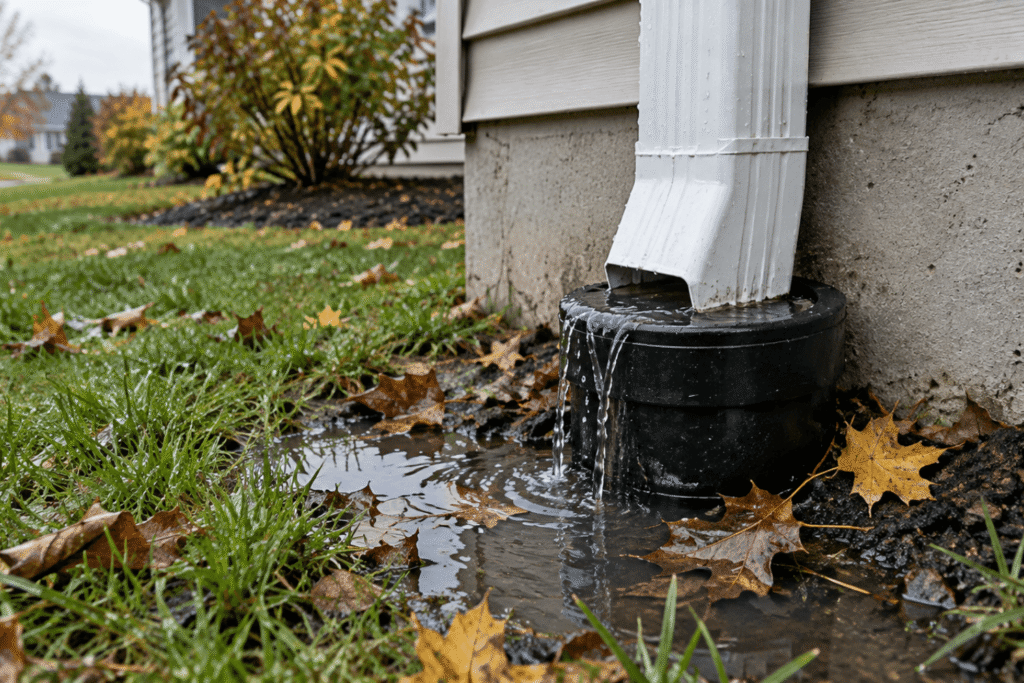
The gutters have been cleaned, but water still pours out where a downspout meets the ground. After rain, the same corner of the yard stays soggy. Meanwhile, a nearby basement wall has started showing damp spots.
When a downspout connects to an underground pipe, part of the drainage system is hidden. That buried section can develop problems even when the gutters above it look clear.
A clogged underground downspout drain may cause water to back up beside the house instead of carrying it away. Fall is a good time to watch for changes, as leaves can enter the system or collect around its outlet. Recognizing the signs can help homeowners address a drainage problem before runoff becomes a recurring basement concern.
What Does an Underground Downspout Drain Do?
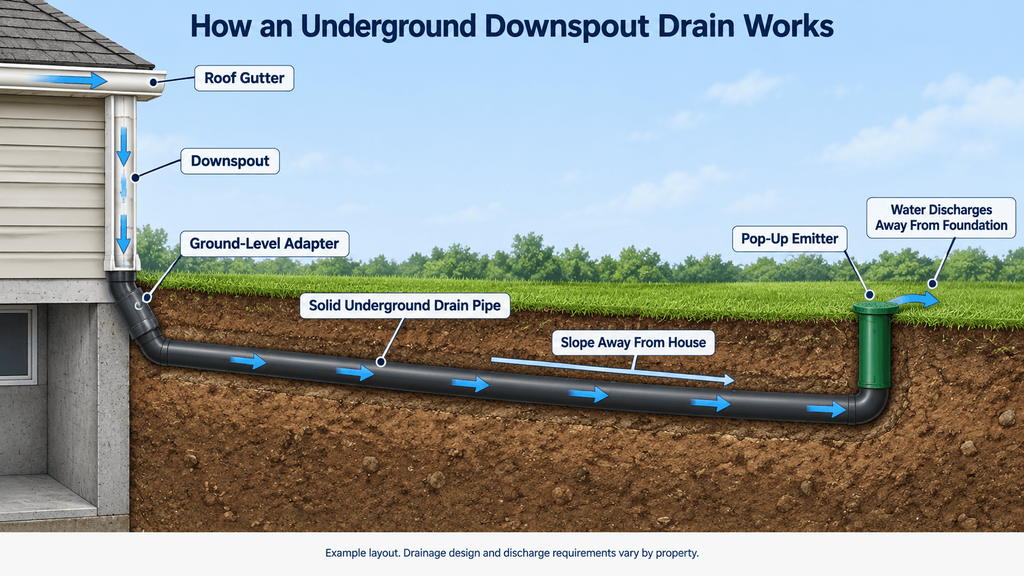
An underground downspout drain carries roof runoff through a buried pipe to a designated discharge location. Some systems release water through a visible outlet or a pop-up emitter in the yard. The appropriate discharge arrangement depends on the property and local requirements.
These buried lines are sometimes called rain conductors. Their purpose is to move roof water away from the home without leaving an extension across the lawn.
The system needs a clear, properly routed path to work. If water cannot move through the pipe or escape at its outlet, it may back up near the foundation. A.M. Wall Anchor & Waterproofing provides downspout drainage and rain-conductor solutions designed to manage this runoff.
Signs Your Underground Downspout Drain May Be Clogged
Most homeowners first notice a problem during rain. The important clue is a change in where water goes, particularly when the same location backs up repeatedly.
Water Overflows at the Ground-Level Connection
Watch the point where the downspout enters the buried pipe. Water spilling upward from that connection can indicate that the line below cannot accept incoming runoff.
Sometimes water escapes through an adapter seam rather than overflowing from the top. A loose connection can leak on its own, so this symptom does not prove a blockage. Repeated backup is a reason to have the line evaluated.
The Yard Stays Soggy Near the Pipe
A wet patch beside the downspout may be easy to blame on rainfall. If that spot remains saturated while surrounding areas dry, however, the drainage system deserves attention.
Water could be escaping from a separated pipe joint or backing up near the inlet. A low area in the yard can produce similar symptoms, which is why the wet patch alone cannot identify the cause.
Gutters Overflow Despite Being Clear

Overflowing gutters usually prompt another cleaning. But if the gutter channel and above-ground downspout are clear, a restriction farther downstream may be contributing to the backup.
Other gutter problems can cause overflow too. The goal is to assess the full route rather than assume that another cleaning will resolve it.
Little Water Reaches the Known Outlet
If the system has a visible discharge point, its behavior can offer another clue. During rain, water backing up near the house while little reaches that outlet may indicate restricted flow.
A covered outlet can also prevent discharge. Leaves or landscaping material may conceal it, particularly when the end of the pipe is rarely checked.
What Causes Buried Downspout Drainage Problems?
Leaves are a common concern in October, but not every underground drainage problem is a simple clog.
Leaves and Sediment Build Up
Small debris can travel through the gutters and into buried piping. Roof grit and sediment may settle inside the line, gradually restricting the space available for runoff.
A system may still handle light rain while backing up during heavier rainfall. That pattern does not confirm a clog, but it is useful information to share during an inspection.
Roots Enter Through Openings
Roots can enter damaged pipes or vulnerable joints where moisture is available. As they grow, they may restrict flow and catch debris.
A recurring blockage may therefore involve more than material washing down from the roof. If roots are involved, clearing the obstruction alone may not address the condition that allowed them inside.
The Pipe Shifts or Deteriorates
Buried piping can separate or become crushed. Settlement may also alter its alignment, interfering with drainage.
These problems can resemble a clog from above ground. Water backs up, but removing debris may not restore dependable flow. An evaluation helps distinguish an obstruction from damaged piping.
Why the Problem Matters to Your Basement
A buried downspout line is supposed to carry water away from the foundation. When it backs up beside the house, roof runoff may instead soak the soil against basement walls.
That does not mean every blocked line causes a basement leak. It does mean the drainage system may be concentrating water where it should be moving it away.
Note any connection between exterior backup and dampness indoors. New staining on a nearby wall is worth mentioning, even if no puddle has formed.
What Homeowners Can Safely Check
Start with observations rather than attempts to force the line open.
- From ground level, look for obvious damage to the downspout connection.
- After the storm passes, check whether leaves cover an accessible outlet.
- Photograph where water overflowed and note how long pooling remained.
- Look inside the nearby basement area for fresh dampness.
- Do not go outside during lightning to inspect drainage. Avoid climbing onto a wet roof or digging to find an unknown pipe.
Forcing a hose or drain-cleaning tool into buried piping without knowing its condition may not resolve the underlying issue. Likewise, do not pour chemical drain cleaner into the system or disconnect it so runoff empties against the foundation.
When to Schedule a Professional Evaluation
Arrange an evaluation when the connection repeatedly overflows or the problem returns after gutter cleaning. Persistent wet soil near the line also warrants attention, particularly when basement moisture appears nearby.
A drainage professional can assess whether the concern involves an obstruction, a damaged section, or the discharge arrangement. The appropriate response depends on the findings. Not every problem requires excavation, and not every line can be restored by clearing debris.
A.M. Wall Anchor & Waterproofing offers downspout drainage and rain-conductor services alongside basement waterproofing. For Western Pennsylvania homeowners, that provides a starting point for investigating recurring runoff problems near the house.
Keep Roof Runoff Moving Away From Your Home
An underground drain can be easy to forget until water starts coming back out. Repeated overflow at the ground-level connection is not something another gutter cleaning will necessarily fix.
If your downspout backs up after rain, contact A.M. Wall Anchor & Waterproofing to discuss a professional drainage evaluation. Identifying what is happening below ground can help keep roof runoff from becoming a problem inside your home.


