
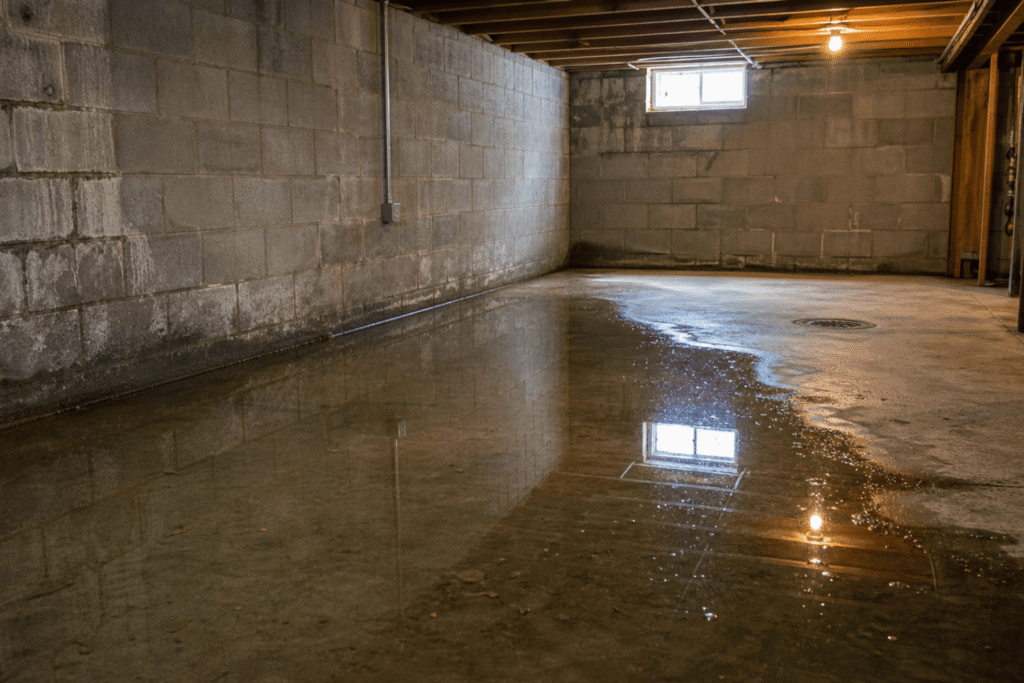
Seeing standing water next to the house after rain can be easy to dismiss. Maybe it is only a puddle near a downspout, a soggy strip of soil beside the driveway, or a low spot that takes a day or two to dry out. But water pooling near the foundation is often a warning sign that drainage is not working as it should.
When water repeatedly collects beside a home, it can saturate the soil around the foundation. Over time, that moisture may contribute to basement seepage, musty odors, foundation cracks, or soil movement. The sooner a drainage issue is identified, the better chance there is to prevent a more significant problem inside or below the home.
Why Standing Water Near A House Matters
Foundations are designed to support a home, but they are not meant to sit beside constantly saturated soil. When water collects close to the house, it can create pressure against basement walls and floors. That pressure may push moisture through small cracks, porous concrete, and joints where walls meet the basement floor.
Water can also change the condition of soil around and beneath the foundation. Some soils expand when they become wet and shrink when they dry out. Repeated swings between wet and dry conditions can contribute to shifting, settling, and other foundation concerns over time.
A puddle after an unusually strong storm does not automatically mean there is a serious foundation problem. Recurring pooling, especially near the same section of the home, is worth a closer look.
Common Causes Of Water Pooling Near The Foundation
Several everyday conditions can direct too much water toward the house.
Clogged Or Overflowing Gutters
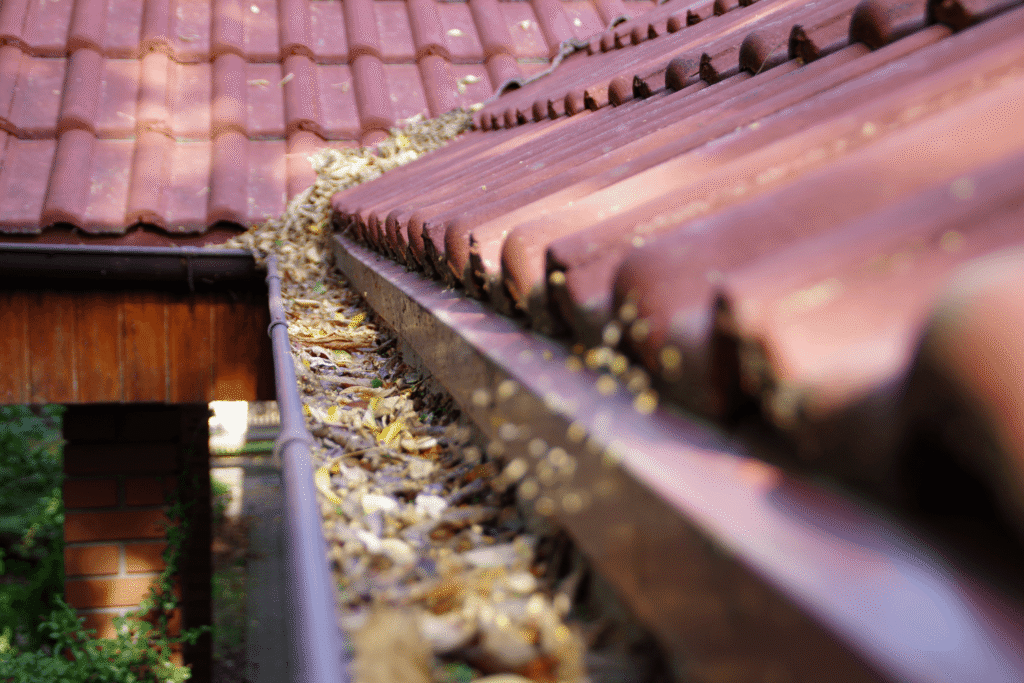
Gutters are designed to catch roof runoff and move it safely away from the home. When they are clogged with leaves, debris, or shingle grit, water can spill over the edge and land directly beside the foundation.
During heavy rain, a gutter overflow can release a large volume of water in one concentrated area. If this happens regularly, the soil near that wall may remain wet long after the rest of the yard has dried.
Downspouts That End Too Close To The House
Downspouts carry water from the roof to the ground. If they end next to the foundation, they may be depositing water in the exact area that needs to stay as dry as possible.
A short downspout may not seem like a major issue, but repeated runoff can create a low spot, wash away soil, or saturate the ground beside the home. Properly directing water away from the foundation is an important part of protecting basements and crawl spaces from moisture.
Yard Grading That Slopes Toward The Home
The land around a house should guide water away from the foundation. Over time, however, soil can settle and create low areas beside the home. Landscaping projects, mulch beds, patios, driveways, and other exterior changes can also alter the direction water travels.
When the grade slopes toward the home, rainwater may flow right to the foundation instead of moving across the yard. Water that remains against basement walls can contribute to seepage and moisture problems inside.
Compacted Soil Or Poor Drainage Conditions
Some yards naturally drain slowly. Clay-heavy or compacted soil can hold water near the surface instead of allowing it to move away. This may result in puddles that linger for hours or days after rain.
A property may also have low spots where water collects from several directions. Those areas can become more noticeable during late-summer storms, when the ground has already been exposed to repeated rainfall.
Hard Surfaces That Redirect Rainwater
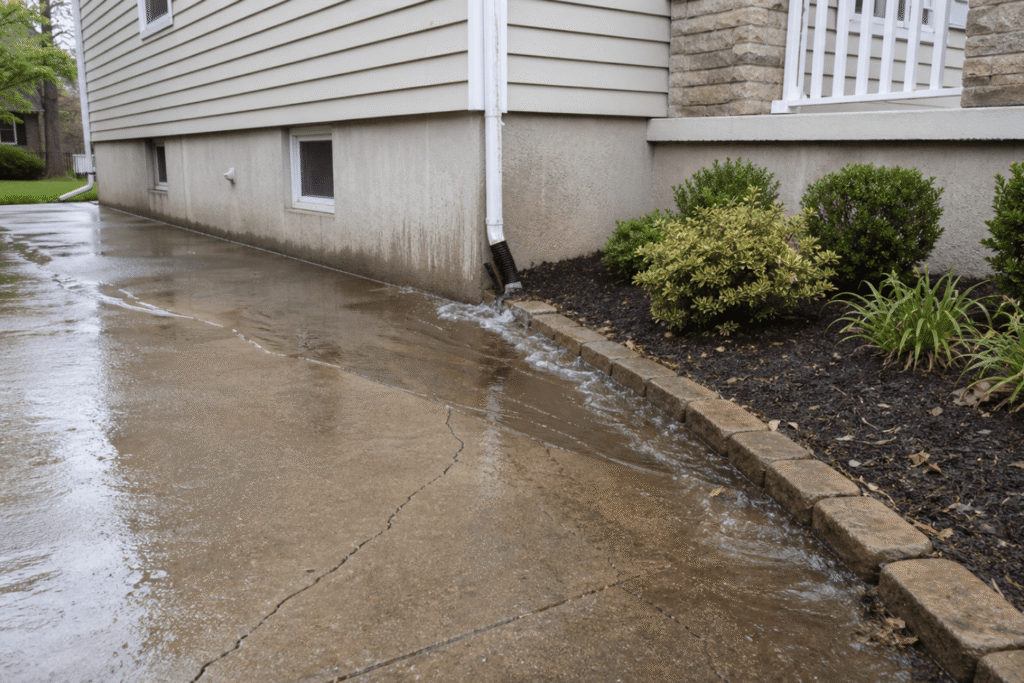
Patios, sidewalks, driveways, and landscaping borders change how rainwater moves through a yard. If concrete or asphalt slopes toward the home, it can channel water directly to the foundation.
Settled pavement can create this issue even if it was not present when the surface was first installed. A driveway that has shifted or cracked may begin sending runoff toward the house, while a patio can trap water against the foundation wall.
Clogged Or Failing Drainage Systems
Some homes already have drainage features such as French drains, rain conductors, swales, or buried downspout lines. These systems need a clear route for water to flow. If they become clogged, damaged, or poorly routed, they may stop moving water away from the foundation.
When a drainage system is not working properly, the problem may show up as pooling water, soggy soil, or a basement that leaks after rain.
Signs The Problem May Be Affecting Your Home
Standing water outside can be a warning sign on its own. It is even more important to act when it appears alongside changes inside the home.
Pay attention to:
- Damp or stained basement walls
- Water near the wall-floor joint after rain
- Musty basement or crawl space odors
- Peeling paint or white chalky residue on concrete walls
- New cracks in basement walls, floors, or interior drywall
- Doors or windows that begin sticking
- Water collecting in the same exterior area after most storms
Water pooling near the foundation does not always cause immediate damage. Still, recurring moisture can create conditions that make basement waterproofing and foundation issues more likely over time.
What Homeowners Can Safely Check
A few simple observations can help identify where water is coming from.
Watch The Yard During Or After Rain
When it is safe, take a walk around the home during a storm or shortly after one ends. Look for gutters that are overflowing, downspouts releasing water near the foundation, or puddles forming against the house.
Notice how long those puddles remain. Water that disappears quickly after a major storm may not be as concerning as water that stays beside the foundation long after nearby areas have dried.
Check Gutters And Downspouts
Keep gutters clear of debris so water can flow freely. Look at where each downspout ends and make sure it is not dumping roof runoff next to the foundation. If a downspout is damaged, disconnected, or difficult to route away from the home, it may need a more permanent drainage solution.
Look For Changes In The Soil
Walk the perimeter of the house and look for low spots, erosion, washed-out mulch, or areas where soil has pulled away from the foundation. These changes may show where water is repeatedly flowing or collecting.
Note Any Indoor Moisture
If water pools outside after rain, inspect the basement or crawl space afterward. Look for damp walls, new stains, puddles, or a stronger musty smell. Photos and notes about the weather can help a professional understand the pattern.
When To Call A Professional
Basic maintenance, such as clearing gutters and checking downspouts, can help reduce surface water. Persistent pooling may require a more complete evaluation, especially when it is connected to basement moisture, foundation movement, or drainage systems that no longer function as intended.
A professional inspection is a good idea when:
- Water pools near the foundation after most storms
- The soil remains saturated for long periods
- Basement leaks or dampness appear after rain
- Water is washing away soil or mulch near the house
- Paved surfaces or landscaping direct water toward the home
- Cracks, sticking doors, or other signs of movement are appearing
A.M. Wall Anchor & Waterproofing provides downspout drainage and rain conductor work, French drain installation, excavation services, basement waterproofing, and foundation repair. An inspection can help identify whether the issue begins with roof runoff, yard grading, an existing drainage system, or another condition around the home.
Protect Your Foundation By Managing Water Early
Water pooling near the foundation is not just a landscaping issue. It can be an early indicator that water is being directed toward the home instead of away from it. Taking note of where water gathers and how often it happens can help prevent moisture from becoming a larger basement or foundation concern.
For homeowners in Western Pennsylvania, A.M. Wall Anchor & Waterproofing can evaluate drainage and foundation conditions, explain what is contributing to standing water, and recommend next steps to help protect the home from moisture and movement. Call us today for your free consultation & estimate.