When a home feels musty, humid, or stale, most homeowners look first at the rooms where they spend their time. They may check the basement, clean air vents, replace HVAC filters, or open windows. One area that is easy to overlook is the crawl space.
A crawl space sits below the first floor, out of sight and often out of mind. Yet it can influence how the home smells, feels, and functions. If that area is damp, moldy, or poorly protected from outside moisture, some of that air can make its way into the living spaces above.
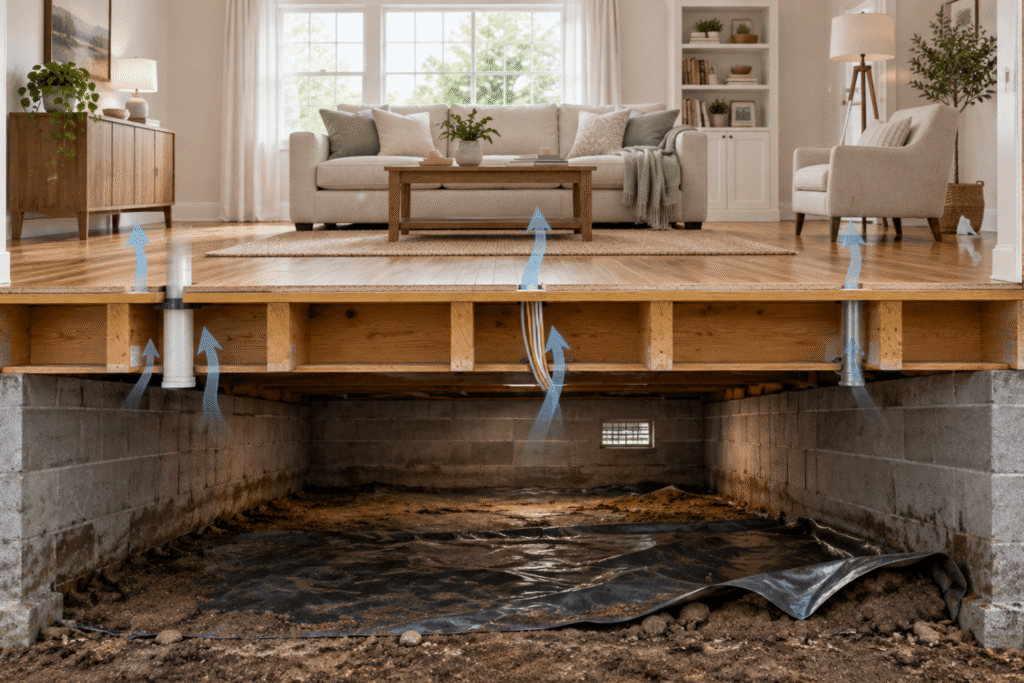
How Crawl Space Air Moves Into The Home
Homes are not sealed boxes. Air moves through gaps around plumbing, wiring, ductwork, floor penetrations, and framing. As air rises and exits through upper levels of the home, it can draw replacement air from lower areas. This natural movement is often called the stack effect.
If the crawl space is damp or musty, that air may be pulled upward into the rooms above. The result can be a persistent odor, a heavier feeling in the air, or humidity that seems difficult to control. Moisture and humidity below the home can contribute to indoor air-quality concerns, mold-friendly conditions, and even damage to floor framing over time.
The crawl space does not have to be visibly flooded to affect the home. Exposed soil, damp insulation, wet wood, or high humidity can all change the air below the first floor.
Signs The Crawl Space May Be Affecting Indoor Comfort
Many crawl space problems are first noticed from inside the home. The signs may seem minor at first, but recurring changes deserve attention.
A Musty Smell That Keeps Returning
A musty smell in first-floor rooms, closets, or near floor vents can be one of the first signs of a damp crawl space. Cleaning the room or using air fresheners may temporarily cover the odor, but it will likely return if moisture remains below the home.
Odors may be stronger near the floor, in rooms directly above the crawl space, or after days of humid weather. A musty smell does not confirm the source on its own, but it is a reason to consider what is happening underneath the home.
Rooms Feel Damp Or Stuffy
High humidity in the crawl space can contribute to a home that feels less comfortable, even when the thermostat is set correctly. The air may feel heavy or stale. First-floor rooms may feel cooler in winter, while the air may feel sticky during warmer months.
Persistent humidity can also make it harder for the HVAC system to maintain consistent comfort. If a room feels damp or uncomfortable without an obvious explanation, moisture below the floor may be part of the issue.
Cold Floors Or Uneven Floor Conditions
A damp, unprotected crawl space can affect the floor above it. Homeowners may notice cold flooring, drafts near baseboards, or rooms that are harder to keep comfortable. In more advanced cases, prolonged moisture can affect insulation and wood framing, which may contribute to soft, uneven, or bouncy floors.
Allergy-Like Irritation Or Stale Air
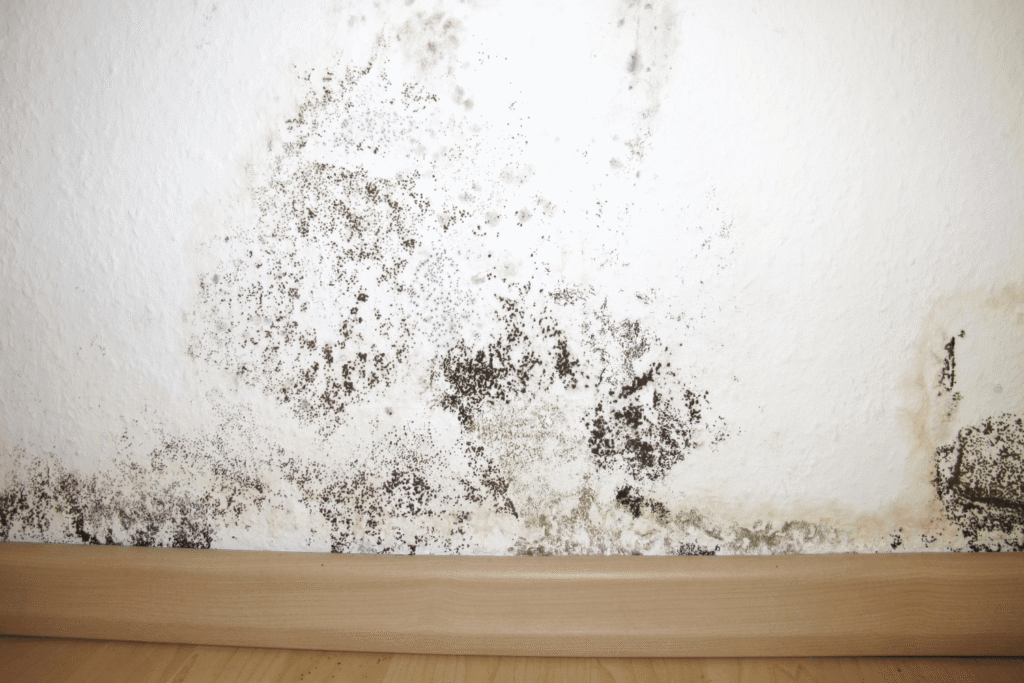
A damp crawl space can support mold and mildew growth. These conditions may contribute to stale indoor air and may be especially uncomfortable for people who are sensitive to dust, mold, or humidity.
This does not mean every allergy symptom is caused by the crawl space. Indoor air quality can be affected by many factors. However, when household members notice recurring discomfort alongside musty odors, dampness, or moisture issues below the home, the crawl space should be considered as part of the overall picture.
What Causes Crawl Space Air Problems?
Crawl spaces can become damp for several reasons. The source may be above, below, or around the home.
Ground Moisture
Many crawl spaces have exposed dirt floors or older vapor barriers that no longer provide adequate protection. Moisture from the soil can evaporate into the crawl space, increasing humidity even when there is no visible standing water.
Poor Exterior Drainage
Rainwater that pools near the foundation can enter the crawl space through gaps, walls, or low areas. Clogged gutters, short downspouts, poor grading, and drainage issues can all contribute to wet conditions below the home.
Plumbing Or HVAC Issues
A slow plumbing leak, condensation on pipes, or ductwork problems can add moisture to the crawl space. These sources are easy to miss because the area is not used every day.
Missing Or Damaged Moisture Protection
A torn vapor barrier, fallen insulation, or open access door can leave the crawl space exposed to outside air and moisture. In some homes, damaged vents or gaps around utility lines can also allow humid air and pests to enter.
A crawl space does not need one dramatic problem to create poor conditions. Small sources of moisture can add up over time, particularly during rainy or humid stretches.
What Homeowners Can Safely Look For
Homeowners should not enter a crawl space that appears unsafe, has standing water, visible mold, electrical concerns, or signs of pests. In an accessible and dry crawl space, a quick visual check from the entrance may reveal useful clues.
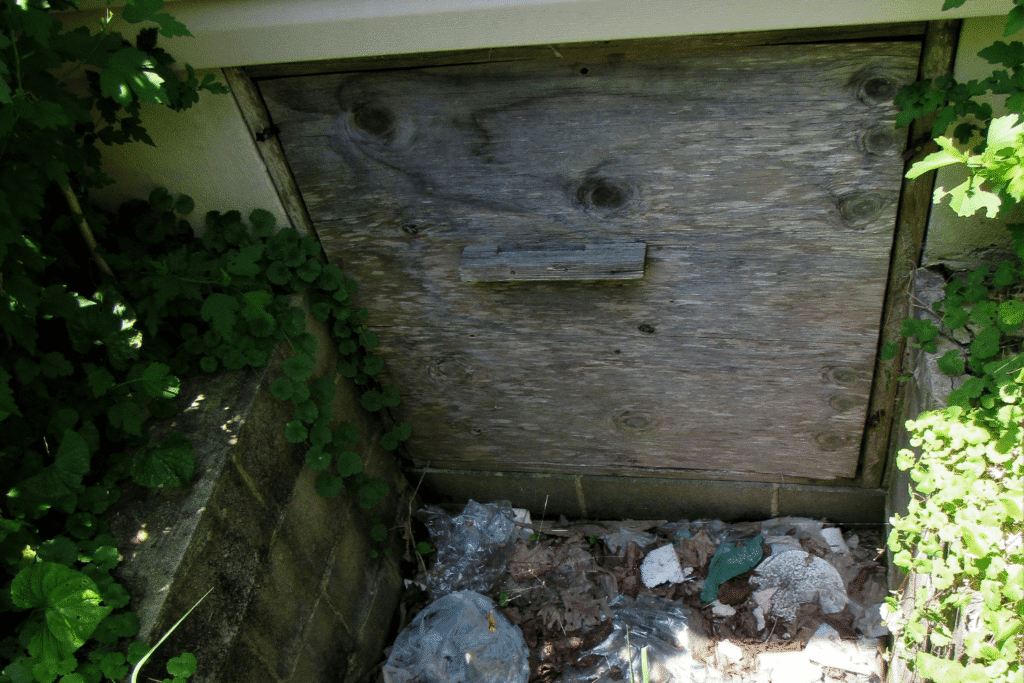
Look for:
- Damp soil or standing water
- Torn, bunched, or missing vapor barrier material
- Insulation that is wet, falling, or damaged
- Visible mold or dark staining on wood
- Strong musty odors near the entry
- Plumbing leaks or condensation on pipes
- Gaps around the crawl space door, vents, or utility lines
Outside, inspect gutters, downspouts, and the ground around the home. Water should move away from the foundation, not collect beside it. Taking photos of visible concerns can be helpful during a professional evaluation.
Why Cleaning The Air Is Not Enough
Air purifiers, scented products, and regular HVAC filter changes can be helpful for general indoor comfort. They do not solve moisture or mold-friendly conditions in the crawl space.
If the source of the problem is below the home, improving the air upstairs without addressing the crawl space can leave the underlying issue in place. Moisture may continue to affect insulation, wood framing, and the air that circulates through the house.
The long-term goal is to identify where moisture is coming from and address the conditions that allow it to remain. Depending on the home, that may involve drainage improvements, vapor barrier work, crawl space encapsulation, insulation repairs, or foundation-related services.
When To Call A Professional
A professional crawl space inspection is a good idea when musty odors, high humidity, damaged insulation, or floor changes persist. It is especially important to schedule an evaluation if there is standing water, visible mold, wood deterioration, repeated pest activity, or signs of foundation movement.
A.M. Wall Anchor & Waterproofing provides crawl space encapsulation, basement waterproofing, drainage services, foundation repair, and related moisture-control solutions. A professional can evaluate the crawl space as part of the whole home, identify conditions that may be affecting indoor comfort, and recommend appropriate next steps based on the specific situation.
Start Below The Floor
A crawl space may be hidden, but its condition can affect the rooms above it. Persistent musty odors, stale air, humidity, and changes in floor comfort can all be signals that moisture is present below the home.
For homeowners in Western Pennsylvania, addressing crawl space conditions early can help protect indoor comfort, building materials, and the long-term health of the home. If you suspect your crawl space may be affecting the air inside, contact A.M. Wall Anchor & Waterproofing for a professional inspection and clear guidance on what to do next.