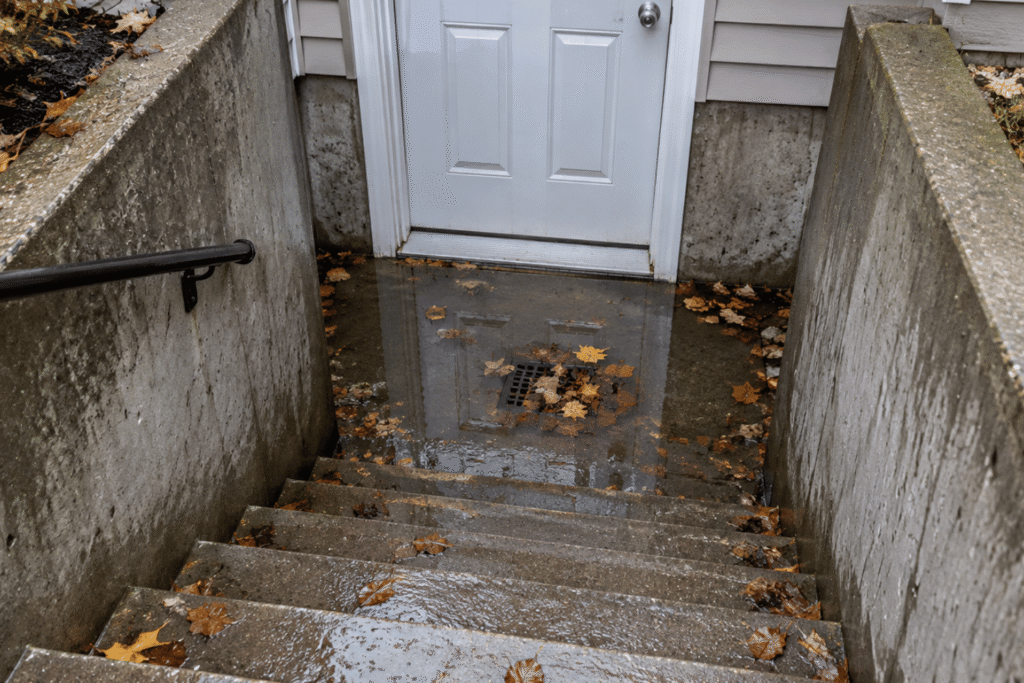
A puddle outside the basement door can seem harmless until it reaches the threshold. During a heavy rain, a small pool at the bottom of the steps may rise quickly, leaving homeowners watching for the first trickle across the basement floor.
For homes with exterior stairs leading down to a basement entrance, that lower landing is a natural collection point. Rain falls directly into the stairwell, while runoff from nearby surfaces may add to the volume. The entrance needs a dependable way for that water to escape.
When water repeatedly collects outside a basement door, the problem may involve more than worn weatherstripping. A blocked drain or runoff flowing toward the steps could be putting more water against the entrance than it can handle.
Why Basement Entrances Collect Water
An uncovered basement stairwell sits below the surrounding ground. Water entering that recessed area flows downhill toward the landing, which is often directly outside the door.
Many entrances have a drain at the bottom to collect that water and carry it elsewhere. If the drain is missing or cannot remove water effectively, the landing can fill until water reaches the doorway.
A walkout basement without a stairwell can experience similar trouble when the surrounding patio or yard directs runoff toward the entrance. The layout differs, but the concern is the same: water arrives faster than it can leave.
Fallen Leaves Can Block the Stairwell Drain
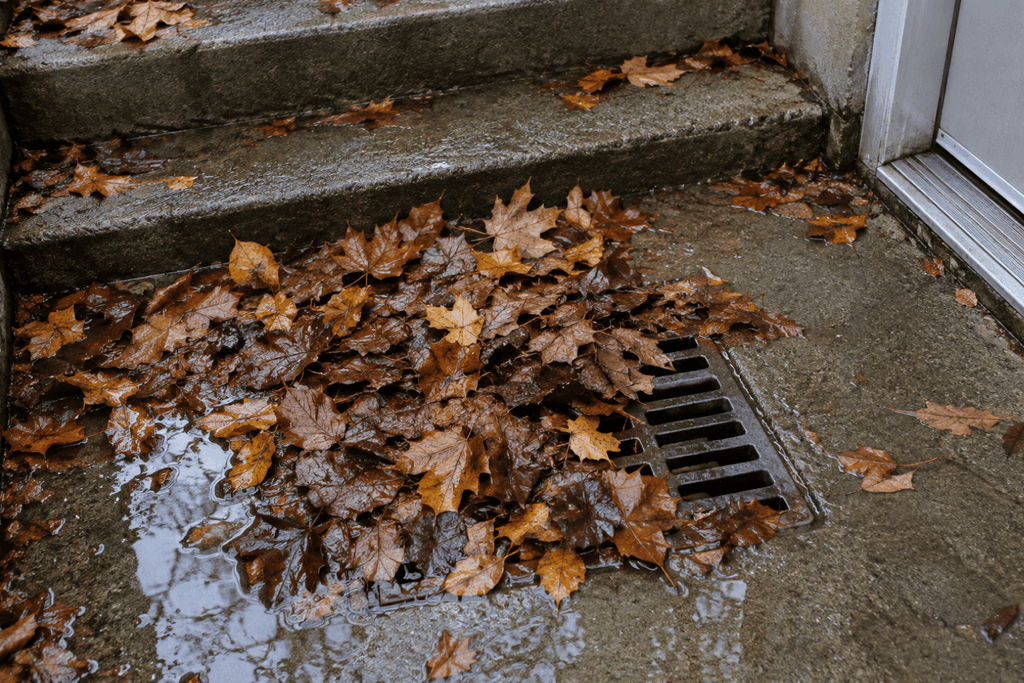
October is a good time to check a basement entrance. Leaves can collect on the steps, then wash down onto the drain during rain. A mat of wet leaves may cover the grate and prevent water from reaching it.
The opening does not have to look completely buried to become restricted. Smaller debris can collect between the openings or beneath material resting on top. Exterior basement drains are particularly vulnerable because the stairwell gathers debris as well as water.
If pooling disappears after accessible surface debris is removed, that is useful information. It does not guarantee that the entire drainage line is clear, especially if the problem keeps returning.
A Clear Grate Does Not Mean a Clear Drain
Sometimes homeowners remove the leaves but still find standing water outside the basement door. That suggests the visible drain opening may not be the only concern.
A grate is simply the entrance to the drainage system. Water still needs a functioning route beyond it. A restriction farther along the line, damaged piping, or a problem at the discharge point may interfere with that route.
The drain’s destination also matters. Depending on the home, stairwell drainage may connect to a sump system or another drainage arrangement. Homeowners should not assume where an older drain leads based on its appearance.
If the landing stays wet despite a clear grate, arrange an evaluation rather than repeatedly pushing tools into an unknown pipe.
Runoff May Be Entering From the Yard
A stairwell drain may be receiving more than the rain that falls directly onto the steps. Nearby ground can channel water toward the entrance, especially when the stairwell sits below a slope.
Look at the area above the steps after rain. Does water flow across the lawn and over the stairwell edge? Has a nearby landscaping bed become a low spot?
Hard surfaces deserve attention too. A patio that slopes toward the entrance can send runoff straight to the landing. When surrounding runoff enters a recessed stairwell, the drain has more water to manage than direct rainfall alone.
This is why recurring basement stairwell flooding should be evaluated in the context of the property, not just the drain opening.
The Landing May Direct Water Toward the Door
Water can collect against the threshold even when a drain is nearby. The shape and slope of the landing affect whether runoff reaches the drain or settles in another location.
A low area directly outside the door may hold a puddle while the rest of the landing drains. Settled or uneven concrete can also change how water moves across the surface. Properly arranged drainage depends partly on directing water toward the collection point rather than toward the doorway.
Photograph where the puddle forms before it spreads. That can help a professional distinguish between water trapped in a low spot and water accumulating across the entire landing.
Why Replacing Weatherstripping May Not Solve It
A damaged door seal can allow rain to enter, so the door’s condition should not be ignored. However, a new seal does not remove standing water from the landing.
If water repeatedly rises against the threshold, the entrance has a drainage concern that deserves attention alongside any door repairs. Replacing weatherstripping may address one opening while leaving the water buildup unchanged.
The important distinction is whether rain is getting past the door during exposure or whether a pool is forming against it. Homeowners do not need to diagnose the difference themselves, but describing what happens can help direct the inspection.
What Homeowners Can Safely Check
Wait until the storm has passed before inspecting exterior basement steps. Wet leaves and standing water can make the stairs slippery.
From a safe, accessible location:
- Look for leaves covering the visible drain grate.
- Note where water first collects on the landing.
- Check whether nearby runoff flows toward the top of the stairs.
- Photograph stains around the threshold or lower door frame.
- Record how long the landing remains wet after rain stops.
Remove loose surface debris only when it is safe to reach. Do not step into deep water to investigate a drain or dismantle an unfamiliar system.
Inside, check for damp flooring near the entrance. Never enter standing water where electrical equipment or energized wiring may be present.
When to Schedule a Professional Evaluation
Recurring pooling is worth investigating before another storm tests the entrance. Schedule an evaluation when water reaches the threshold or comes under the door. A drain that stays slow after surface debris is cleared also needs a closer look.
A professional can assess how water reaches the landing and whether it has an adequate route away. The findings may point to drainage work or indicate that a door specialist or another contractor should be involved.
A.M. Wall Anchor & Waterproofing provides basement waterproofing and exterior drainage services. Those services offer a starting point for Western Pennsylvania homeowners dealing with recurring water near a basement entrance.
Keep Water Away From the Threshold
Water pooling outside a basement door should not become something to manage with towels after every rain. Clearing leaves from an accessible grate is helpful, but recurring buildup calls for an understanding of the whole drainage path.
If your basement landing repeatedly fills or water has started entering beneath the door, contact A.M. Wall Anchor & Waterproofing to discuss a professional evaluation. Identifying why water collects can help determine the appropriate next step before another wet-weather problem develops.


